
Bluegrass Gardening
Table of Contents
Last Updated: October 15, 2026
Why Fall Is the Best Time for Landscape Renovation
The best time for landscape renovation in Louisville is fall, roughly from mid-September through early December. Cooler air slows water loss from leaves while soil stays warm enough for roots to keep growing, so new plantings settle in before winter instead of struggling through summer heat.
Fall gives you a second growing season underground. The air cools, but the soil does not. That gap between cool air and warm soil is the whole trick, and it is why a plant installed in October often outperforms the same plant installed in May.
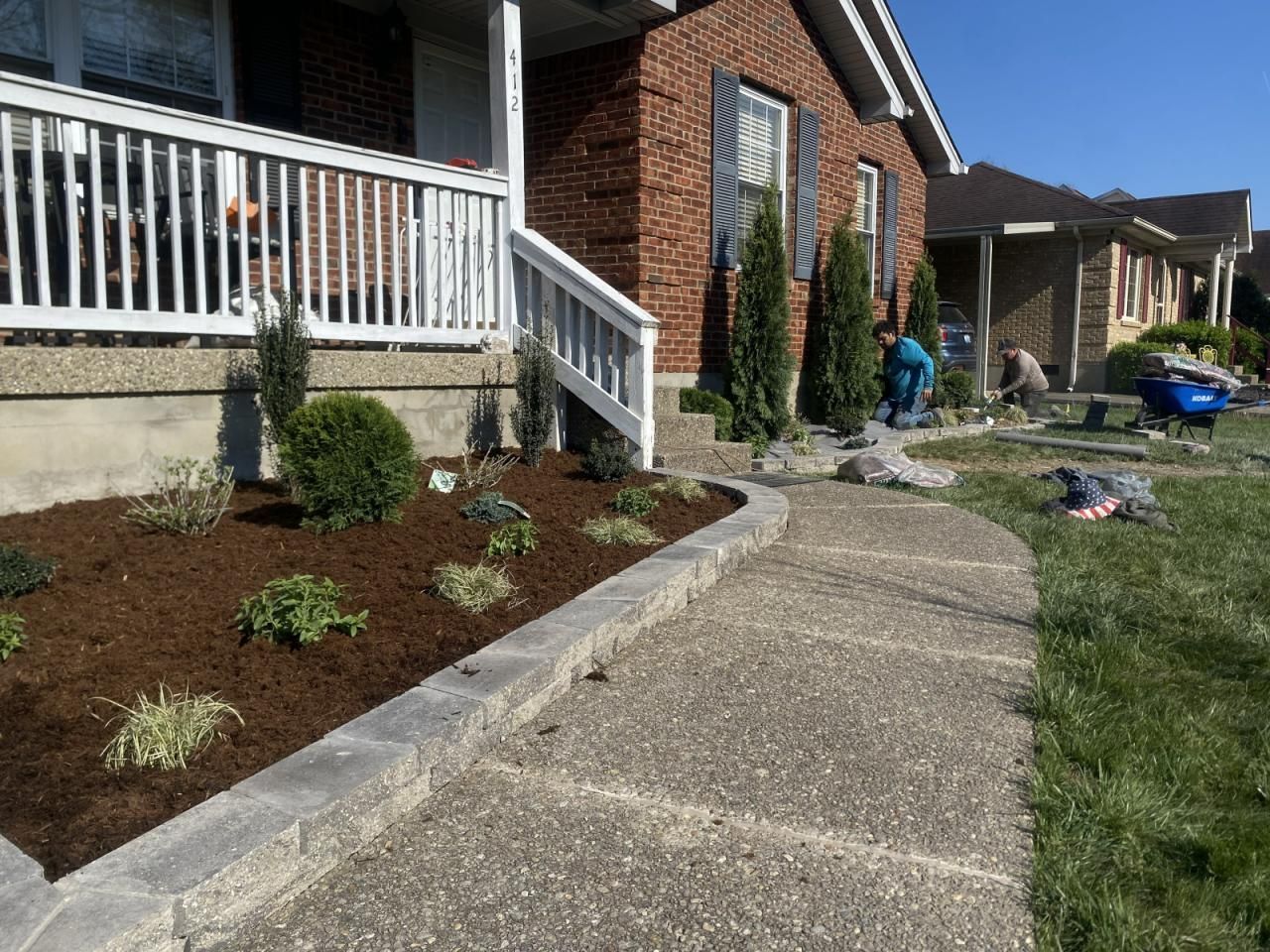
A landscaper in work clothes planting a young shrub in a residential garden bed, with autumn leaves on the ground and a house visible in the background
What Cooler Temperatures and Warm Soil Do for New Plants
Warm soil plus cool air pushes energy into root growth rather than top growth. A shrub planted in fall spends its first weeks building roots instead of pushing leaves, which is the opposite of what happens in spring. The USDA Plant Hardiness Zone Map puts Louisville in Zone 7a, where soil typically stays workable well into November.
That root-first pattern matters for renovation work. When we strip out overgrown beds and replant, the new material has months to anchor before it faces a Kentucky summer.
Root Establishment Before Summer Heat Arrives
Roots keep developing through mild fall and winter soil temperatures, so plants enter spring already established. By the time July heat and dry spells arrive, a fall-planted shrub has a root system that can actually reach water. Spring plantings spend that same summer trying to establish and survive at once, which is why so many of them stall or die in their first year.
The Best Time to Plant Trees and Shrubs
The best time to plant trees and shrubs is early fall, ideally late September through October, while soil is still warm and rainfall is more reliable. Balled-and-burlapped and container-grown stock both handle fall installation well.
A common mistake is waiting until the plant is fully dormant in December and the ground is close to freezing. At that point you have lost most of the rooting window. Aim earlier.
Evergreens deserve a note here. They keep losing moisture through their needles all winter, so they benefit from fall planting more than most people expect.
If you are adding privacy screening, fall is also the season to get it right. Tall screening material is heavy, and planting it while soil is workable means less stress on both the plant and the crew.
The Best Time to Plant Perennials
The best time to plant perennials is early fall, about six to eight weeks before the ground freezes, so roots can establish before dormancy. In our area that usually means September into early October. Spring is the second-best window, though plants face summer sooner.
Perennials planted in fall get the same root-first advantage as shrubs, and they typically emerge fuller the following spring. The tradeoff is timing: plant too late and the crown does not have enough time to settle before cold sets in.
A few practical notes from our experience:
- Divide and relocate overgrown perennials in early fall, while you can still see where everything sits
- Plant pollinator-friendly perennials in fall so they bloom on schedule next season
- Hold off on heavy late-season fertilization, which pushes soft growth that cold damages
- Water new perennials through dry fall spells, even after the air turns cool
For a full garden renovation, fall is also when we can see the existing bed structure clearly and plan what stays, what moves, and what goes.
Landscape Renovation Planning Timeline
A landscape renovation planning timeline usually runs three to six months from first call to installation, and larger projects with specimen trees, custom stone, or significant grading can stretch longer. Design, plant sourcing, scheduling, and material lead times each consume real calendar time, and they do not overlap as neatly as homeowners expect. Starting the conversation in summer is what makes a fall installation realistic rather than rushed.
Here is how we typically sequence a project:
| Phase |
When |
What Happens |
|---|---|---|
| Consultation and site review |
4-6 months out |
Walk the property, assess drainage, soil, sun, and existing plant health |
| Design and plant selection |
3-4 months out |
Drawings, plant list, material choices, revision rounds |
| Scheduling and procurement |
8-12 weeks out |
Lock installation dates, order trees, shrubs, and stone |
| Installation |
Fall window |
Removal, grading, planting, hardscape |
| Establishment care |
First year |
Watering guidance, monitoring, seasonal adjustments |
When to Call a Designer and Schedule Installation
Call a designer in late spring or early summer if you want a fall installation. That window allows for design revisions, plant sourcing, and a slot on the schedule before the fall rush fills it. Fall is the busiest installation season in this region, and the homeowners who plan ahead get the dates and the plant material they want.
A common pattern we see: a homeowner calls in September wanting a full renovation installed by October. At that point, the design can still move quickly, but the plant sourcing and crew calendar are the constraints. Large caliper trees, specialty evergreens for privacy screening, and cut stone often need to be reserved weeks in advance.
How Off-Season Scheduling Affects Availability
Late fall and winter are slower for installation crews, which can work in your favor for certain tasks. Grading, drainage corrections, and hardscape prep can often be scheduled in these windows when the ground is workable and crews have more flexibility. The trade-off is weather: frozen ground halts excavation, and heavy winter rain can delay grading work. A phased plan that puts drainage and grading in late fall and planting in early spring is a legitimate approach for properties with serious water issues.
What Homeowners Can Do Before the First Consultation
You do not need a design to start the process well. Before the first walkthrough, note where water pools after a storm, which beds have become overgrown or lost their shape, and where you want more privacy or shade. Photographs taken across a full day help, because sun and shade patterns shift. This kind of preparation shortens the design phase and gives the designer a clearer picture of how you actually use the property.
If you are weighing a phased renovation, the planning timeline is the right place to start. Our garden design and landscape planning service is built around sequencing work across seasons so the property improves steadily rather than all at once.
Landscape Drainage Solutions: When to Fix Wet Spots
Landscape drainage solutions should be addressed before any planting goes in, not after. Fixing grade and water flow first protects everything you install later. Fall is an ideal time to diagnose wet spots, because you can see how water behaves after real rain.
Wet areas usually trace back to a few causes: compacted soil, poor grading, downspout discharge, or a low spot that collects runoff. Cosmetic fixes like adding soil on top rarely solve it. Water finds the low point again.
What we look at during a drainage assessment:
- Where water enters the property and where it stalls
- Whether beds and turf sit below surrounding grade
- How downspouts and surface flow are directed
- Whether soil is compacted or drains poorly
- How proposed plantings and hardscape will affect flow
Get this wrong and you will be replanting the same wet corner every year. Get it right and the beds stay healthy, the hardscape stays stable, and the plants stop drowning.
How to Sequence a Landscape Renovation in Phases
Sequencing a landscape renovation in phases keeps disruption manageable and spreads the work across seasons. More importantly, each phase has its own ideal timing window, and getting that order right is what separates a renovation that settles in from one you are constantly patching. Drainage and grading come first, then structural planting, then perennials and finishing layers. Phasing is also how most homeowners make a large project affordable and livable.
A typical sequence, with timing guidance:
- Drainage and grading. Solve water first. Late summer through fall is ideal because you can see how water behaves after real rain, and the ground is still workable for excavation. Everything downstream depends on this step.
- Tree and shrub planting. Structural plants define the space, privacy, and shade. Early to mid-fall is the strongest window for root establishment before summer heat returns. Privacy screening material benefits most from this timing because it needs a full season to knit together.
- Hardscape elements. Patios, walkways, and decorative stone go in once grades are set. Hardscape can be installed across a wider range of conditions than planting, but it should follow drainage work, not precede it.
- Perennials and pollinator planting. Fill the beds once the bones are in place. Early fall planting gives perennials a root-first start, and they typically emerge fuller the following spring.
- Establishment care. Water, monitor, and adjust through the first year. This phase is not optional, and it is where fall-planted material shows its advantage.
Why Timing Follows Sequence
The logic is simple: each phase creates the conditions the next one depends on. Drainage corrections change grades, which changes where hardscape can sit and where beds should be shaped. Structural planting establishes shade and wind protection that affect what will thrive in the perennial layer. If you plant perennials before the trees and shrubs are in, you may end up moving them once the shade pattern changes.
This is also why we discourage installing hardscape before drainage is corrected. Water redirected by a new patio or walkway will find the nearest low spot, and that spot is often a freshly planted bed.
Phasing Across Seasons
Phasing also lets you renovate one area at a time, so the whole yard is never torn up at once. Many homeowners start with the front beds or a problem drainage area, then expand the following season. A common approach for established properties with mature trees and overgrown beds is to tackle drainage and structural planting in fall, then add perennials and finishing stone the following spring or fall.
If your property has mature trees, overgrown beds, or drainage issues that have been building for years, a phased plan is usually the honest answer rather than a single-season overhaul. Our garden design and landscape planning service is built around that kind of long-view thinking.
Frequently Asked Questions
Is fall or spring better for a landscape renovation?
Fall is generally better for planting trees, shrubs, and perennials because warm soil and cooler air encourage root growth without heat stress. Spring works well for projects that need fresh grading or drainage corrections before summer storms. Many homeowners start planning in late summer and schedule installation for September through November. A consultation can confirm which season suits your specific yard.
Can a landscape renovation be completed in phases?
Yes. Phasing lets you spread work across seasons and budgets. A common approach is to fix drainage first, then plant trees and shrubs in fall, add perennials the following spring, and finish hardscape elements later. This sequencing protects new plants and keeps disruption manageable. During landscape renovation planning, ask your designer to map which tasks belong in which season.
When is the best time to fix drainage problems in a landscape?
Late summer and early fall are ideal for landscape drainage solutions because soil is workable and you can see where water actually pools after storms. Correcting grading and installing drainage before fall planting protects new roots from sitting in saturated soil. If your yard has chronic wet spots, address them first so the rest of the renovation has a stable foundation.
How far ahead should I plan a landscape renovation?
Start the landscape renovation planning timeline two to three months before your target install date. That gives time for a site walk, design revisions, plant selection, and scheduling. Fall is the busiest season for installation, so booking early helps secure your preferred window. Homeowners who begin planning in summer are typically ready for a fall install.
News & Articles
Browse Our Newsletter
Get Started Today
Your Landscape Deserves Someone Who Understands It
Whether you're planning a full garden renovation, a seasonal reset, or a smarter planting plan for your front yard, we're ready to help. Get in touch today, and let's talk about what your property needs.