Case Study: Solving a Persistent Drainage Problem with Functional Landscape Design

Client
John G. – Louisville, KY
Project Date
Completed and reviewed November 3, 2025
Project Goal
Eliminate a low-lying, constantly wet area by improving drainage and transforming it into an attractive, low-maintenance landscape feature using rock, ornamental grasses, and trees.
The Challenge
John’s backyard had a recurring issue: a section of the property where water pooled after every rainfall. The standing water made mowing difficult, created muddy spots, and limited what could be planted there.
The client wanted a long-term solution—not just to fix the drainage but to make the area visually appealing and cohesive with the rest of the yard.
This project required balancing function and design: correcting water flow without disrupting the yard’s layout or neighboring properties.
Our Process
1. Site Assessment and Drainage Planning
In early fall 2025, the Bluegrass Gardening team began with a detailed evaluation of the area’s grade, soil type, and runoff pattern. The low spot was collecting water from two directions, with compacted clay soil preventing natural drainage.
We developed a custom drainage plan that included:
- Repair and reinstalling a French drain system with perforated pipe wrapped in geotextile fabric to capture and redirect excess water.
- Adding a layer of gravel for filtration and to prevent soil clogging.
- Re-grading the surface slightly to ensure proper slope toward the drainage line.
2. Installation and Water Flow Testing
Once trenches were dug and pipe installed, the team ran a water test to confirm flow and adjust the grade as needed. By verifying during installation, we ensured water would move efficiently even during heavy rains.
3. Rock Bed and Planting Design
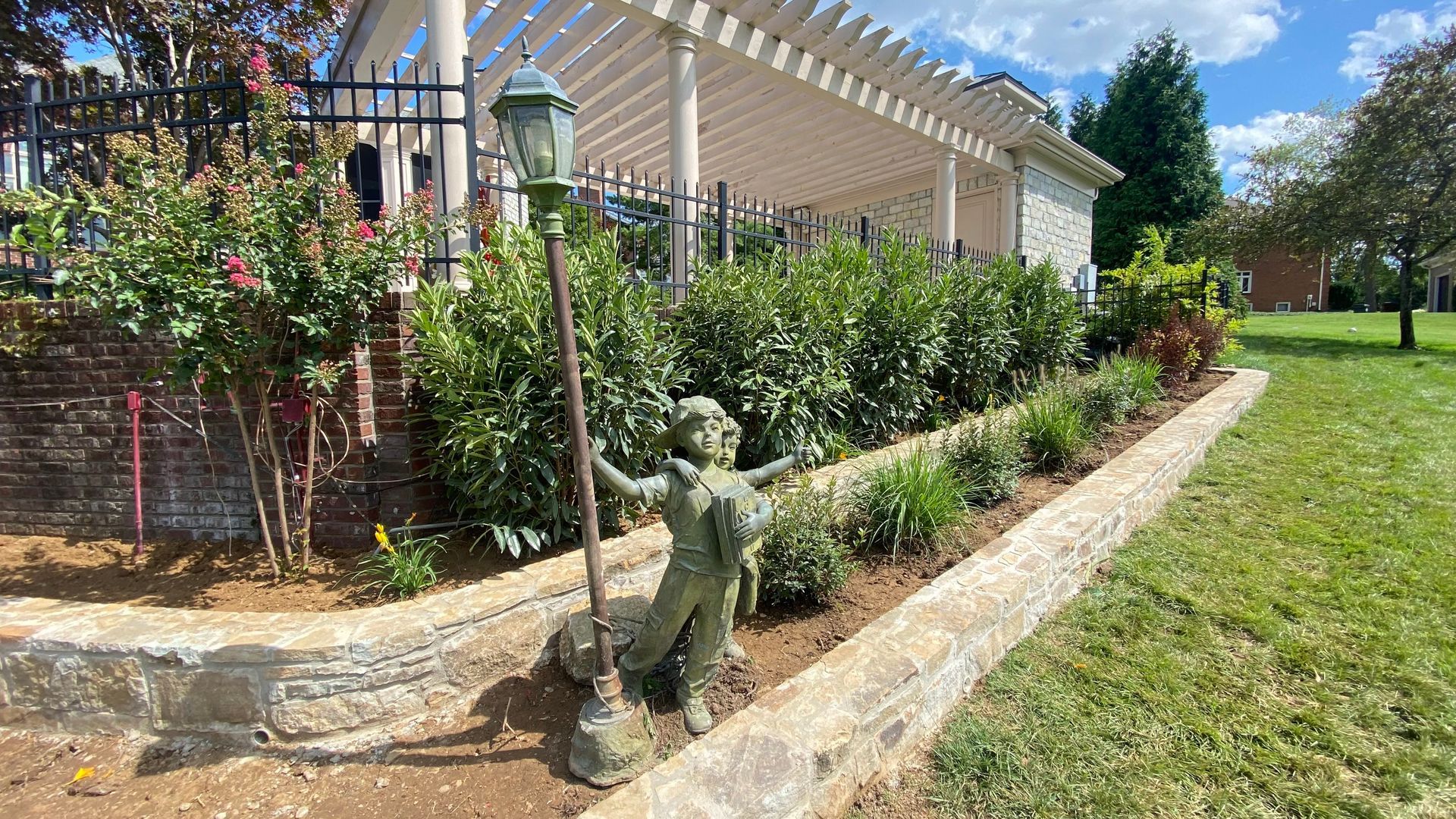
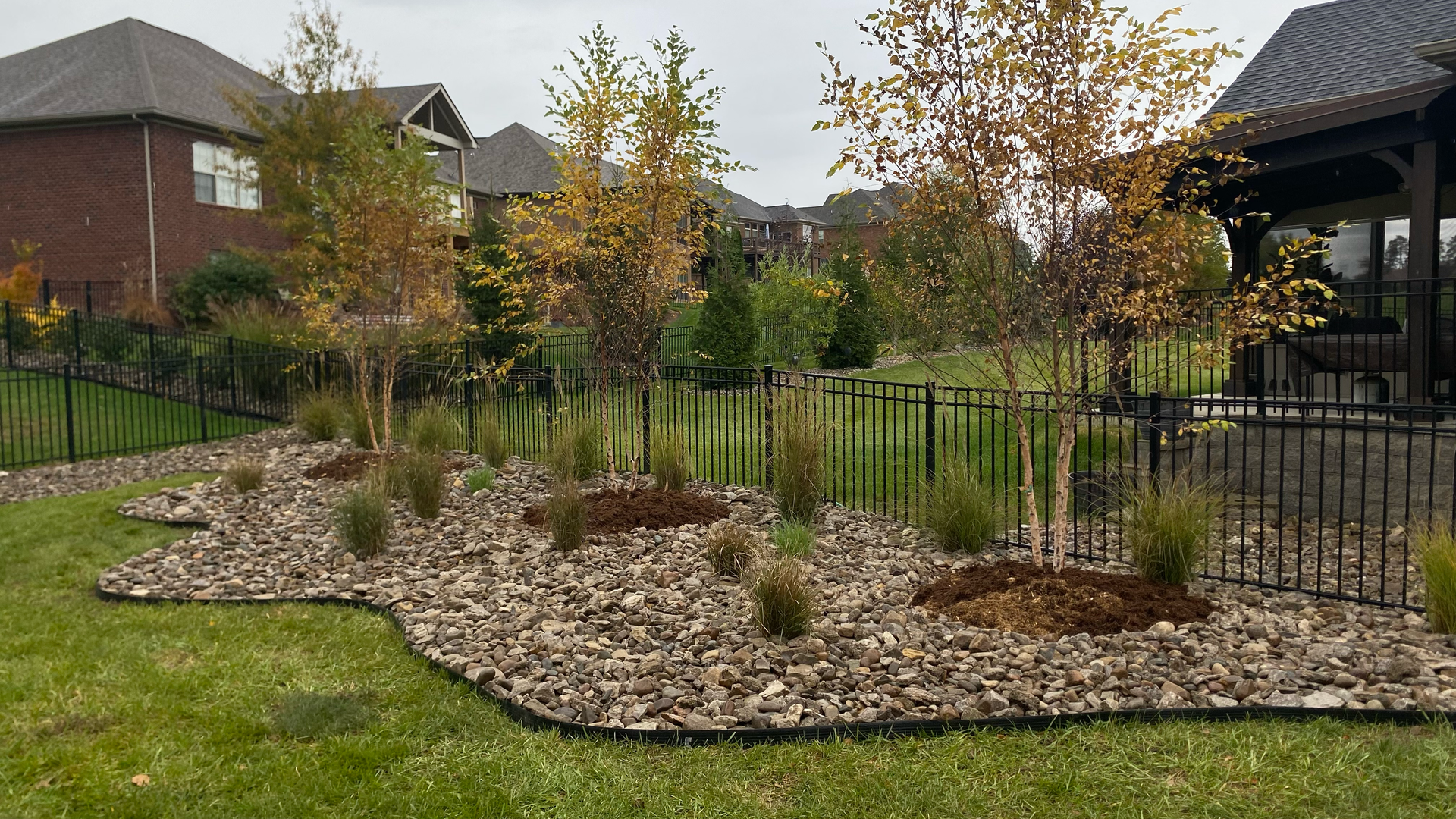
With the drainage system in place, we transformed the area into a decorative rock bed using river rock for a natural, clean look.
We selected ornamental grasses and hardy trees that thrive in periodically moist soil conditions, adding both structure and movement to the space.
The plant selection included:
- Feather reed grass (Calamagrostis) for vertical texture and root stability.
- River birch (Betula nigra)—a tree species that tolerates wet soil and adds height and seasonal interest.
- Switchgrass (Panicum virgatum) for low-maintenance color and erosion control.
4. Finishing Touches
The edges were defined with metal landscape edging for a crisp border, and new topsoil and seed were added around the perimeter to blend the installation into the existing yard.
Challenges & Solutions
Challenge: Clay soil made digging and grading difficult, increasing the risk of future pooling.
Solution: We incorporated a thicker gravel base and verified slope during the install to guarantee long-term drainage performance.
Challenge: Balancing utility with aesthetics.
Solution: By designing the drainage zone as a
decorative feature rather than a utilitarian trench, we achieved both goals—functionality and curb appeal.
Results
By the end of the 2025 fall season, the once-problematic area had been completely transformed. Water now drains effectively even after heavy rainfall, and the mix of rock, grasses, and young trees adds texture and visual balance year-round.
The project earned a 5-star review on November 3, 2025, highlighting the client’s satisfaction:
“Low lying perpetually wet area taken care of by drainage work and installation of grasses / trees / rock which looks great! Prompt, efficient, professional work, good value for a fair price!”
—John G, Louisville (November 3, 2025)
Takeaway
What began as a soggy, unusable patch of yard became an attractive, low-maintenance focal point. This project—completed and reviewed in November 2025—shows how proper drainage design and smart material choices can turn problem areas into standout landscape features.
At Bluegrass Gardening, we specialize in combining function, form, and local expertise—helping Louisville homeowners solve tough landscape challenges with results that last.