

Bluegrass Gardening
Last Updated: November 2, 2026
Quick Summary
Front yard landscaping before and after transformations usually come from subtraction, not bigger budgets: clearing sightlines around the house and redrawing bed lines does most of the visual work. The rest comes from fixing drainage and grading first, then sizing plants for their mature width instead of nursery-pot fullness.
- Flag keeper trees and shrubs first, then prune hard before pulling anything out.
- Fix grading and water flow before planting, or new plantings fail within two seasons.
- Call 811 before digging so buried utilities are located, free of charge.
- Set plants for mature width, layer tallest at the back, and repeat three to five plant types.
- Phase the work: diagnose, correct drainage, clear and reshape, plant, then refine.
Table of Contents
- Why Front Yard Landscaping Before and After Photos Look So Different
- What an Overgrown Front Yard Makeover Actually Involves
- Front Yard Drainage Solutions That Stop the Wet Spots
- Front Yard Planting Design: Sizing Plants for the Long Haul
- Front Yard Landscaping Ideas That Photograph Well and Live Well
- How to Plan a Front Yard Renovation in Phases
- Book a Front Yard Walkthrough With Bluegrass Gardening
- Frequently Asked Questions
Why Front Yard Landscaping Before and After Photos Look So Different
Most of what you see in a front yard landscaping before and after photo isn't new plants. It's subtraction.
The second reason is timing. A freshly installed bed photographs well because plants are spaced for their mature size, not crammed for instant fullness.
If you've wondered why your own yard can't get there, the answer usually comes down to four moves: clearing, reshaping, drainage, and sizing plants correctly. Our Work shows real completed transformations you can compare against your own yard.
What an Overgrown Front Yard Makeover Actually Involves
An overgrown front yard makeover is a structured renovation, not a cleanup day. It starts with an honest inventory of what's worth keeping, then rebuilds bed lines and entry so the house reads clearly from the street.
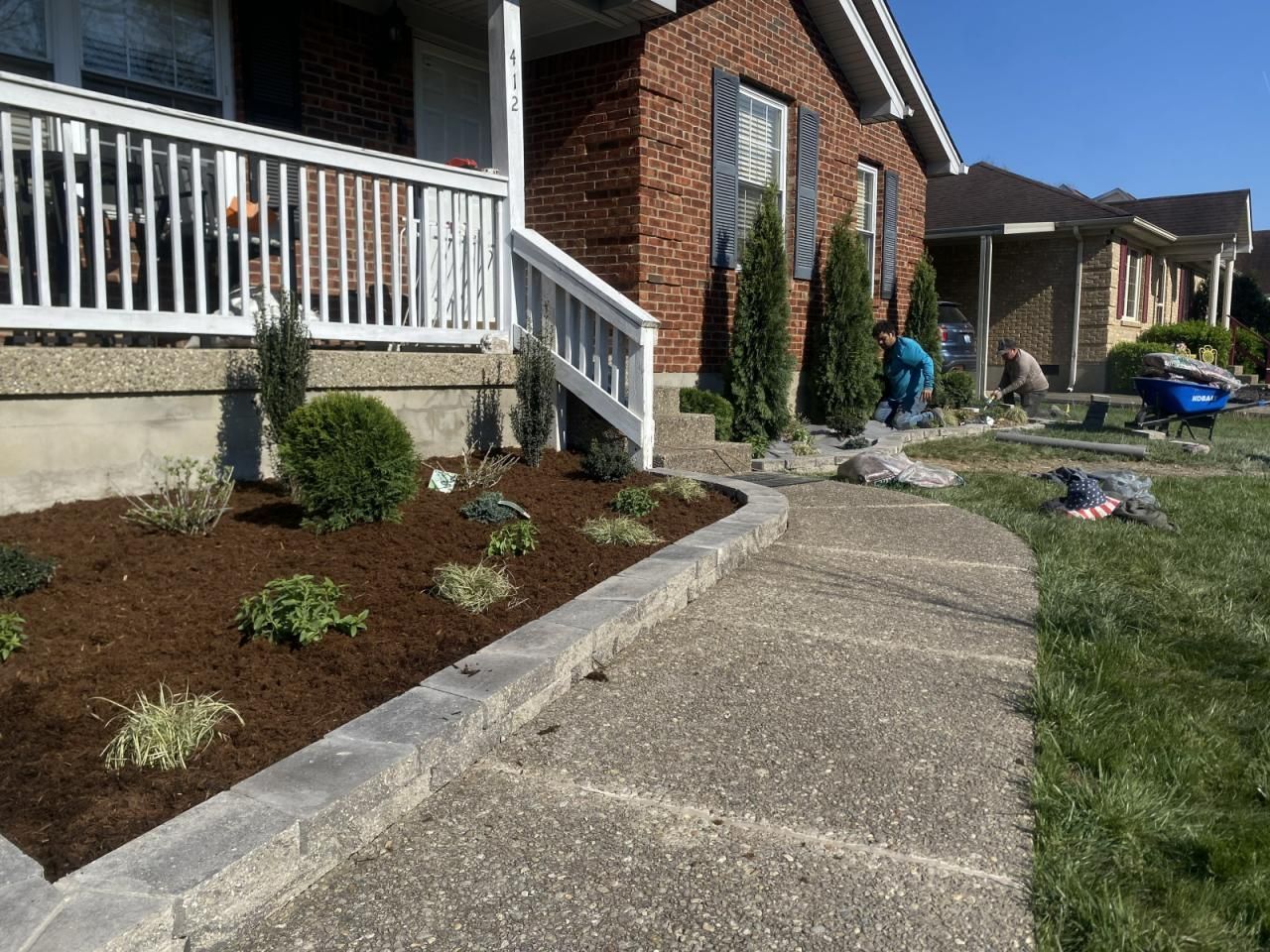
Landscaper removing overgrown shrubs as part of a front yard landscaping project near a brick walkway
Clearing the Overgrowth Without Losing What Still Works
The biggest mistake we see is wholesale removal. Mature trees, healthy boxwoods, and established foundation plantings often have decades of root development behind them, and replacing that takes years.
A common approach is to flag keepers first, then cut around them. Overgrown shrubs are frequently the wrong plant in the right place, not a dying one, prune hard before you pull.
Reshaping Beds and Defining the Entry
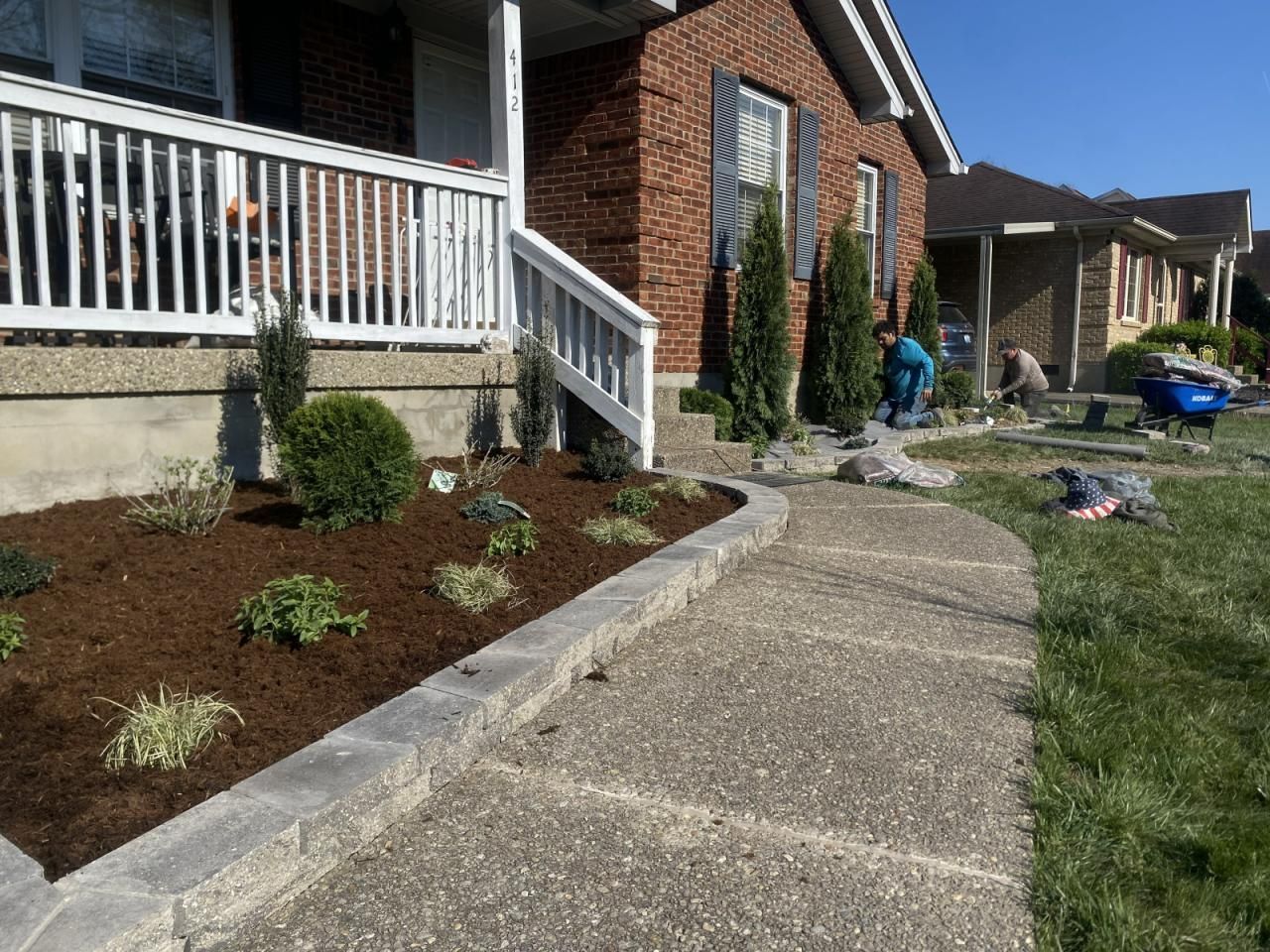
Bed lines do more visual work than any plant. A crisp, deep curve that follows the walk and frames the door changes how the whole facade reads.
Bed redefinition is also one of the quickest curb appeal upgrades, and it can be done before a larger renovation. Mulch and bed redefinition is the fastest curb appeal upgrade, and you can book it.
Front Yard Drainage Solutions That Stop the Wet Spots
Standing water in a front yard is a grading and soil problem before it's a planting problem. Fix the water first, or every plant you install sits in a bathtub.
The useful first step is diagnosis, because the right solution depends on where the water starts, where it wants to go, and whether the soil can absorb it.
Start With a Rain-Day Site Assessment
You can learn more in one heavy rain than in an hour of walking a dry yard. Put on boots and watch the property while it's raining, then again in the hour after. Note four things:
- Where water enters the yard , roof discharge points, a neighbor's higher ground, a driveway apron, or sheet flow across the whole frontage
- Where it ponds and how long it stays , a puddle gone in an hour is a different problem from one that lingers for days
- Where it leaves , a defined low corner, a curb, a storm inlet, or nowhere at all
In established neighborhoods, a yard that drained correctly when the house was built can change over time as the house settles or beds are built up against the foundation. That history matters as much as the current grade.
Match the Fix to the Cause
Drainage solutions get matched to where the water actually pools and why:
| Where water collects |
Likely cause |
Typical fix |
|---|---|---|
| Against the foundation |
Soil sloped toward the house, or beds built up over the original grade |
Regrade to shed water away from the wall |
| Below downspouts |
Discharge too close to the wall or onto a flat grade |
Extend downspouts and redirect flow to a positive outlet |
| Middle of the yard |
Compacted or clay-heavy soil with no infiltration |
Aerate and amend, or convey the water to a designed low point |
| Along a property line |
No defined outlet, or a neighbor's runoff crossing the line |
Swale or dry creek bed to channel runoff to an approved outlet |
| A persistent low corner |
Settled fill or a natural depression |
Regrade, or install a dry creek bed that doubles as a feature |
Regrading is the highest-leverage fix when the problem is slope, because it corrects the cause rather than moving water around.
Downspout extensions are often a useful first step for a puddle below a downspout, but extending one onto a flat grade just relocates the puddle a few feet farther out.
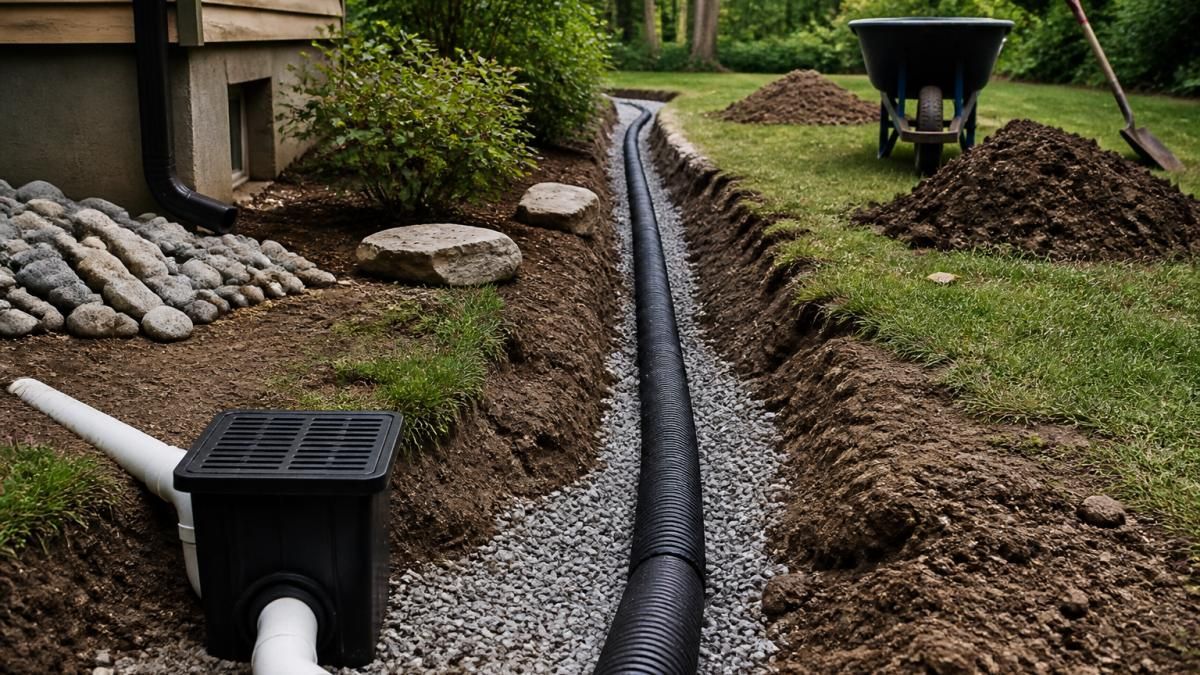
A French drain is the workhorse for conveying water across a yard to an outlet. It moves water; it doesn't make it disappear, and it needs a place to discharge.
Installation Specifics That Separate a Fix From a Temporary Patch
A drainage system that works for a season and then fails usually failed on the details:
- Slope: the trench or swale needs a consistent fall toward the outlet; flat or back-sloped runs collect sediment and clog.
- Trench depth and width: sized to the volume of water the run must carry.
- Pipe and gravel: perforated pipe in washed gravel, wrapped in filter fabric, overlapped correctly so soil doesn't migrate in and clog the system.
Utilities, Permits, and Runoff Rules
Before anyone digs, call 811 to have buried utilities located. It's free and helps prevent costly mistakes.
Runoff rules vary by location. Check with your local government about restrictions on directing stormwater onto neighboring properties or into the public right-of-way, and about any permits for grading changes. Confirm locally before work begins.
When to Call a Professional
Some drainage problems are a weekend project. Others are not. Call a professional promptly when you see:
- Water pooling against the foundation or seeping into a basement or crawl space
- Erosion that is undercutting a walk, driveway, or retaining wall
- Water near utilities, a septic system, or a gas line
If your yard floods repeatedly, professional drainage work can address the cause rather than the symptom. Why is my yard always flooded explains how hardscaping can fix drainage issues. A walkthrough can help you determine whether you need a regrade, a conveyance system, or both.
Front Yard Planting Design: Sizing Plants for the Long Haul
Front yard planting design means selecting and placing plants according to mature size, water needs, and light exposure rather than how full they look in the nursery pot. Get this right and the bed improves every year; get it wrong and you're pruning to control size forever.
Choosing Plants by Mature Size, Not Nursery Size
A shrub that looks modest in a gallon container can reach eight feet wide. Read the tag, then halve your spacing assumptions.
- A compact evergreen that reads as a tidy ball in a three-gallon pot can spread several feet wide at maturity, set it where that width is welcome, not against a walk.
- A flowering shrub sold as a small accent can grow tall enough to block a window if placed under one.
- A shade tree's mature canopy, not its trunk, sets the planting distance from a walk or roofline.
Spacing, layering, and repetition do the rest:
- Spacing: set plants for their mature width, not their current width
- Layering: tallest at the back, mid-height in the middle, low growers at the edge
- Repetition: repeat three to five plant types rather than one of everything
The thing nobody tells you about low-maintenance landscapes is that they're designed, not maintained. Right plant, right place is the whole strategy.
Match Plants to Soil, Light, and Water
The most common planting failure isn't the wrong plant, it's the right plant in the wrong spot. Before you choose anything, read the site:
- Light: how many hours of direct sun does the bed actually get? Morning and afternoon sun aren't interchangeable, and a bed sunny in spring can be shaded by midsummer.
- Soil: clay holds water and stays cold longer in spring; loam drains and warms sooner. A plant that wants sharp drainage will sulk in clay no matter how well it's spaced.
- Water: low spots that hold water need plants that tolerate wet feet, or the grade needs fixing first.
A common pattern in established yards is a bed that was planted for full sun decades ago and is now shaded by the trees that grew. Renovation is often less about replacing plants than about replanting for the light the bed has now.
Design for Seasonal Interest, Not Just Spring
A front yard that looks good only in May is a missed opportunity. Layer the planting so something is doing work in each season:
- Evergreens carry the structure through winter and give the bed a backbone
- Spring bloomers provide the early color most people picture when they think of a front yard
- Summer and fall interest , foliage color, late perennials, ornamental grasses, keeps the bed from going flat after the first flush
Time the Planting to the Season
Planting timing matters as much as plant choice. In this region, spring and fall are the workhorse planting windows, with fall often preferred for trees and shrubs because soil is still warm while air temperatures cool, giving roots a head start before summer stress. Summer planting is possible but demands more attention to water while plants establish.
Privacy and Screening Without the Overplanting Trap
Privacy landscaping is where mature-size discipline pays off most. The instinct is to plant tight for instant screening, but overplanted screens thin themselves out, shade each other, and lose the lower branching that made them useful.
Seeing the plan before anything is dug is where many homeowners gain confidence. Ask us about reviewing a design before work begins.
Front Yard Landscaping Ideas That Photograph Well and Live Well
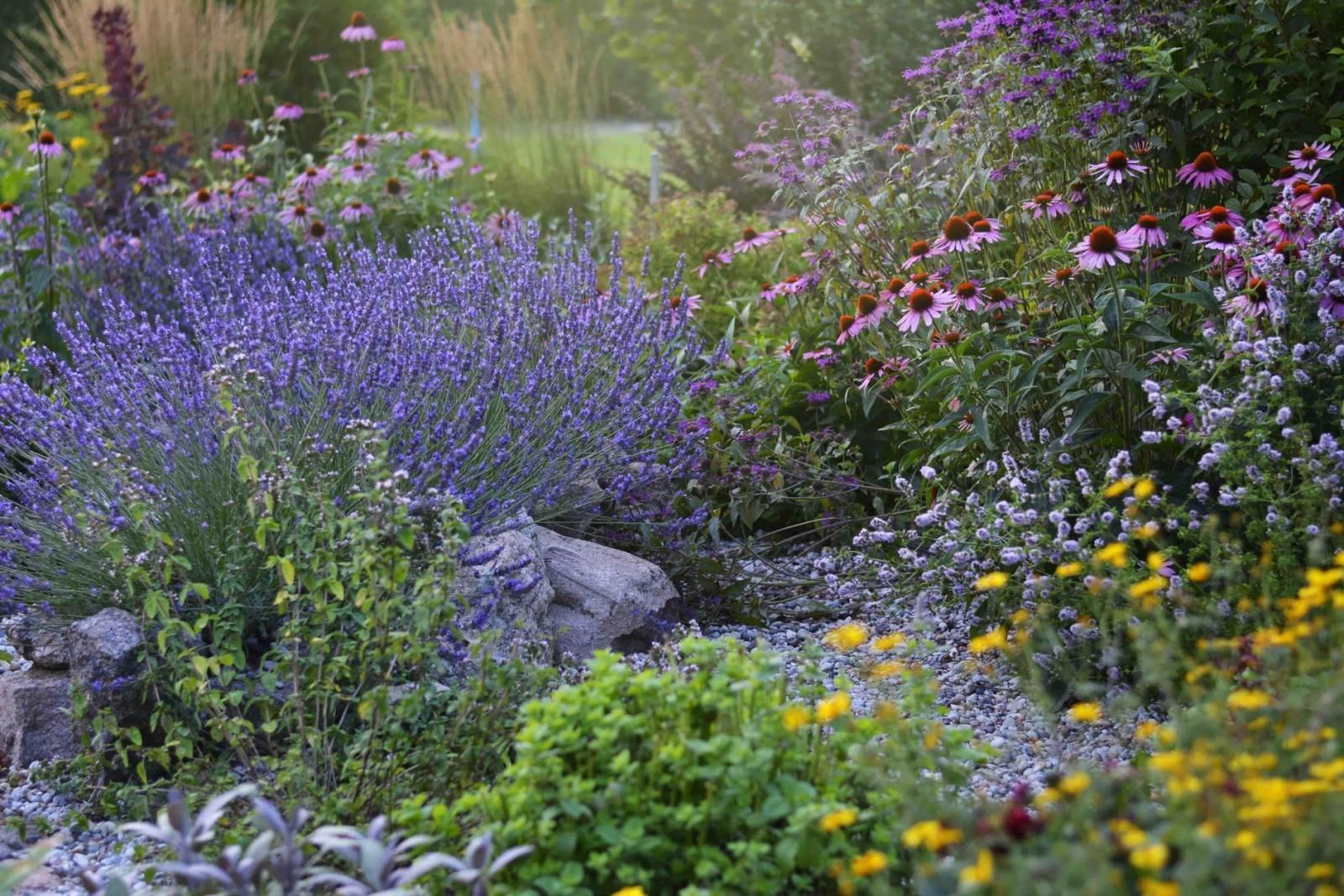
The ideas that hold up in real life share one trait: they solve a site problem while looking good. A dry creek bed handles runoff and reads as a design feature. A layered bed of evergreens and perennials screens a busy street and gives the entry depth.
We group front yard landscaping ideas into three practical categories:
- Structural: bed redefinition, stone edging, walkway definition
- Living: trees, shrubs, and perennials chosen for mature size and seasonal interest
- Functional: grading, drainage, and privacy screening that also looks intentional
How to Plan a Front Yard Renovation in Phases
Phasing is how a large renovation stays manageable. Split the work into a sequence where each phase stands on its own and the next one builds on it.
A workable order looks like this:
- Diagnose: assess drainage, soil, sun, and what's worth keeping
- Correct: fix grading and water flow before anything is planted
- Clear and reshape: remove overgrowth, redraw bed lines, define the entry
- Plant: install trees and shrubs sized for maturity
- Refine: add perennials, stone, and finishing details
Budget is a fair question. Costs depend on scope, site access, and plant size, so the most useful next step is a walkthrough of the property to discuss your specific project.
Book a Front Yard Walkthrough With Bluegrass Gardening
The gap between a tired front yard and one that stops traffic usually isn't money. It's diagnosis. Water in the wrong place, plants set too close, and bed lines that never got redrawn will undo any planting budget.
Bluegrass Gardening handles landscape renovation, garden design and installation, tree and shrub planting, and drainage and grading solutions for established homes in Louisville. We start with a walkthrough and discuss what can be kept before work begins.
Frequently Asked Questions
How do you plan a front yard landscaping transformation?
Start by walking the property and writing down what actually fails: standing water after heavy rain, shrubs crowding the windows, a walkway that disappears under mulch. Photograph the yard from the street before any work begins so the before and after comparison is honest. Then rank the problems by severity, since drainage and grading have to be solved before planting design makes sense. Most homeowners find the first phase is clearing and correcting, and the visible front yard landscaping payoff comes in the second phase.
What changes make the biggest difference in a front yard landscape?
In practice, three changes carry most of the visual weight. Clearing overgrown shrubs away from the house opens up the facade and instantly makes the entry readable. Reshaping bed lines with clean curves instead of straight strips changes how the whole yard reads from the street. Correcting drainage so beds stop holding water keeps everything alive afterward. New plantings matter, but they only look right once those three are done, which is why a front yard landscaping before and after photo often shows less new material than people expect.
How long does a front yard landscape renovation take?
Timeline depends on scope and season. Timing for a bed renovation with clearing, reshaping, and replanting depends on the size and complexity of the project. Projects that include grading, drainage correction, or hardscape elements take longer because those stages cannot be rushed and weather affects scheduling. Ask for a phased schedule in writing so you know which weeks the yard is torn up and which weeks it is settling in. Planting timing also matters, since some installs are better held for cooler weather.
How do you choose plants for a front yard that are the right mature size?
Read the mature size on the plant tag, not the size in the pot. A shrub that reaches six feet wide will swallow a three-foot bed within a few seasons, and that is the single most common reason a front yard planting design looks crowded two years after installation. Space plants for their mature spread, accept that the bed looks sparse in year one, and let it fill in. Group plants by water and light needs so the beds stay manageable without constant replacement.
News & Articles
Browse Our Newsletter

Get Started Today
Your Landscape Deserves Someone Who Understands It
Whether you're planning a full garden renovation, a seasonal reset, or a smarter planting plan for your front yard, we're ready to help. Get in touch today, and let's talk about what your property needs.