
Table of Contents
- Understanding Landscaping Cost: What You're Actually Paying For
- Landscape Design Cost Factors That Shape Your Estimate
- Softscaping vs. Hardscaping: Two Very Different Budgets
- Choosing Plants for Sun vs. Shade (And Why It Changes Your Budget)
- The Professional Landscape Installation Process, Step by Step
- Hidden Costs: Permits, Drainage, and Long-Term Maintenance
- How to Budget for Landscaping and Save Money Without Cutting Corners
- Frequently Asked Questions
Last Updated: September 24, 2026
Understanding Landscaping Cost: What You're Actually Paying For
Landscaping cost is the total amount you pay for materials, labor, equipment, and design work to change or maintain your yard. It is not one number. It is a stack of separate decisions, and each one moves the price.
This guide from Bluegrass Gardening breaks down what drives that stack, from softscaping to hardscaping, so you can plan with clear eyes. Homeowners often ask us how much does landscaping cost before they know what they want. The honest answer: it depends on scope, site conditions, and materials. A simple planting refresh costs far less than a full backyard renovation with a patio and drainage work.
The biggest mistake is treating a quote as a single figure. Ask what it includes. When you compare estimates, compare the same scope.
Landscape Design Cost Factors That Shape Your Estimate
Several factors move your landscape design cost up or down. The most common ones:
- Property size and square footage. More ground means more materials and more labor hours.
- Site access. Tight gates or steep slopes slow crews and add equipment needs.
- Soil condition. Poor soil requires amendments or replacement before planting.
- Existing features. Removing old patios, trees, or overgrown beds adds demolition cost.
- Design complexity. Custom curves, grading, and specimen plants raise the design fee.
- Material choice. Standard pavers and nursery stock cost less than premium stone and mature trees.
A common mistake is skipping a professional estimate to save money. That usually costs more later when plant placement, drainage, or grading goes wrong.
Softscaping vs. Hardscaping: Two Very Different Budgets
Softscaping and hardscaping are the two halves of any landscape, and they carry very different price tags, lifespans, and maintenance loads.
Softscaping covers the living parts: lawns, trees, shrubs, flowers, and soil. Hardscaping covers the built parts: patios, walkways, retaining walls, and other stone or concrete features.
Softscaping usually costs less per square foot because the materials are plants and soil.
Material quality tiers change the math
The single biggest swing in any hardscape quote is material grade. Most contractors quote one of three tiers:
| Tier | What it means | Trade-off |
|---|---|---|
| Builder-grade | Standard concrete pavers, thin veneer, basic block | Lowest upfront cost; more color fade, chipping, and reset work over time |
| Mid-grade | Thicker pavers, tumbled stone, natural stone veneer | Balanced cost and lifespan; the most common choice for residential patios |
| Premium | Full-thickness natural stone, custom-cut pieces, high-end retaining systems | Highest upfront cost; longest lifespan and lowest long-term repair rate |
Lifespan and maintenance by project type
| Project Type | Main Cost Drivers | Typical Lifespan | Annual Upkeep |
|---|---|---|---|
| Softscaping (plants, sod) | Plant size, soil prep, labor | Years, with care | Watering, weeding, mulch refresh, occasional replacement |
| Hardscaping (patios, walls) | Base prep, material grade, excavation | Decades | Occasional re-sanding, joint repair, sealing |
| Irrigation systems | Zones, trenching, controls | 10-15 years | Winterizing, head replacement, controller updates |
| Drainage solutions | Site grading, pipe, outlets | Long-term | Seasonal clearing, outlet checks |
The maintenance ROI angle most guides skip
Installation cost is only the first number. The second number is what you spend every year to keep the work looking good. A few patterns hold up across most yards:
- Native and climate-matched plants typically need less water, less fertilizer, and fewer replacements than exotic species. The upfront savings on a cheap non-native plant often disappear within two seasons.
- Drip irrigation uses less water than spray heads and puts moisture at the root zone, which reduces disease and replacement costs.
- Proper base depth under hardscape is invisible but determines whether a patio stays flat for 20 years or shifts within three.
- Mulch depth of two to three inches suppresses weeds and holds soil moisture, cutting both water and labor costs.
Choosing Plants for Sun vs. Shade (And Why It Changes Your Budget)
Choosing plants for sun vs shade is the single most important planting decision you will make. Get it wrong and plants fail, which means paying twice.
- Watch the yard at 9 a.m., noon, and 4 p.m. Note which beds get full sun.
- Track how many hours of direct sun each spot receives in summer.
- Check soil moisture in each bed after rain. Wet spots signal drainage issues.
- Note existing plants that thrive. They tell you what the site supports.
The Professional Landscape Installation Process, Step by Step
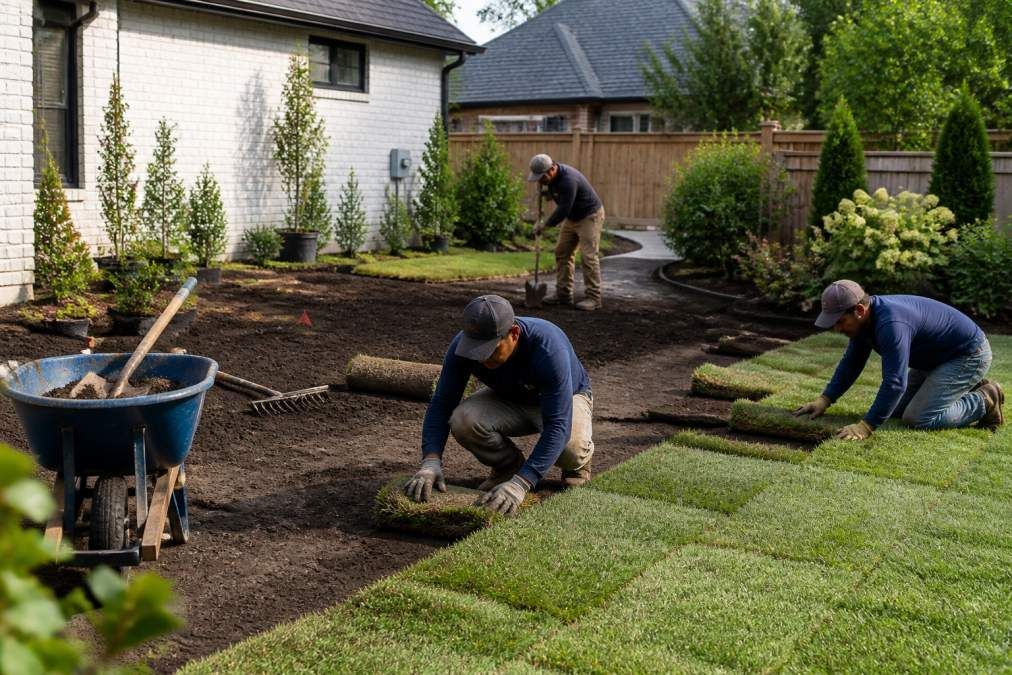
Professional landscape installation follows a set order. Skipping steps causes failures that show up months later.
Hidden Costs: Permits, Drainage, and Long-Term Maintenance
Two costs surprise homeowners most: permits and long-term maintenance.
Permitting and regulatory costs. Many retaining walls, drainage changes, and structural hardscape projects require a permit from your local building department. Rules vary by city and county, so check with your local office before work begins. A permit adds a fee and can add review time to your schedule. Skipping it can mean fines or forced removal later.
How to Budget for Landscaping and Save Money Without Cutting Corners
A phased plan is the smartest way to control landscaping cost. You do not have to build everything at once, and breaking a large project into stages spreads the spend across multiple seasons while you learn what your yard actually needs.
A three-year phasing example
Say your full wish list is a patio, a new lawn, a planting bed, and drainage work. Instead of quoting it all at once, split it:
- Year 1, Fix the problems. Drainage, grading, and soil. These are the foundation. If water pools against the house or sits in a bed, nothing built on top will last. Budget this first even though it is the least visible stage.
- Year 2, Build the bones. Hardscaping such as a patio or walkway, plus irrigation. These are the expensive, long-lifespan items, so getting them right early avoids rework later.
- Year 3, Plant and finish. Trees and shrubs first, then perennials to fill beds. Smaller nursery stock planted in year three often catches up to larger stock planted in year one, at a fraction of the cost.
Hidden line items to budget for
Two costs surprise homeowners most: permits and long-term maintenance.
Permitting and regulatory costs. Many retaining walls, drainage changes, and structural hardscape projects require a permit from your local building department. Rules vary by city and county, so check with your local office before work begins. A permit adds a fee and can add review time to your schedule. Skipping it can mean fines or forced removal later.
Ways to save without wrecking quality
- Choose smaller nursery stock. It costs less and often catches up within a few seasons.
- Keep the existing layout where it works. Redesign only what fails.
- Use standard-size pavers instead of custom-cut stone.
- Do the planting yourself if you enjoy it, and hire out grading and hardscape.
- Group phases so one crew mobilization covers multiple tasks, which cuts equipment and travel charges.
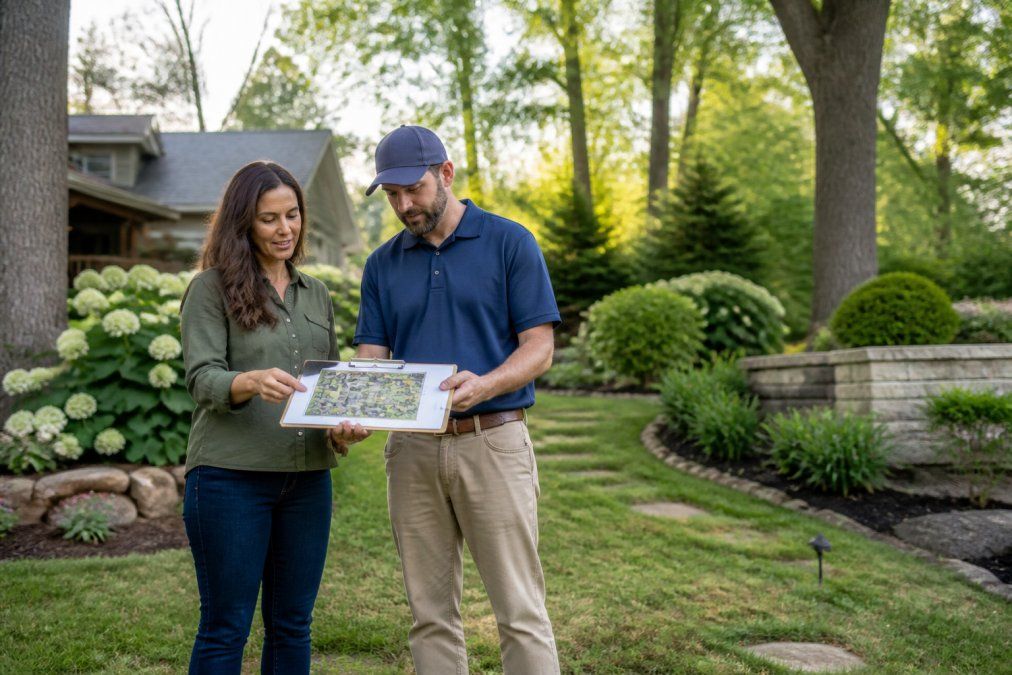
For homeowners who want the work done right the first time, a professional estimate is worth the conversation. A good designer will walk your property, flag drainage issues, and lay out a phased plan that fits your budget and your yard.
Frequently Asked Questions
Is spending money on landscaping worth it?
A well-planned landscape can improve curb appeal and make your outdoor space more usable, which matters if you plan to sell or simply want to enjoy your yard. The return depends on scope, plant choices, and how well the work holds up over time. Phased projects and durable materials often deliver better long-term value than rushing a full renovation at once.
How do sun and shade requirements impact the cost of plant selection?
Plants suited to your yard's actual light conditions cost less over time because they establish faster and need fewer replacements. A shady bed may call for understory trees and shade perennials, while a full-sun area needs drought-tolerant species. Getting the plant positioning right the first time avoids the hidden cost of replacing plants that were wrong for the spot.
What is the difference between basic yard maintenance and a full landscape renovation?
Basic maintenance covers mowing, trimming, and seasonal cleanup to keep an existing yard tidy. A full renovation involves redesign, site preparation, new planting, and often hardscaping like patios or retaining walls. Renovation addresses underlying issues such as drainage or poor soil, while maintenance preserves what is already there.
How should I prioritize my landscaping budget for the best long-term results?
Start with the structural work that is hardest to change later: grading, drainage, and any hardscape elements. Then invest in soil preparation and plant selection matched to your light conditions. Finish with cosmetic touches. Phasing the project this way spreads the cost and ensures each layer supports the next.
Landscaping cost comes down to scope, site, and materials, and the smartest homeowners plan in phases instead of all at once. If your yard has drainage problems, poor soil, or an outdated layout, cosmetic fixes will not hold. Bluegrass Gardening designs and installs residential landscapes built for the long term, from custom planting and garden design to hardscaping and seasonal maintenance. Get started with Bluegrass Gardening and turn a difficult yard into a space that works for years.