
Table of Contents
- Quick Comparison: Best Privacy Plants for Louisville
- Why Louisville Yards Need a Different Approach to Privacy Planting
- Native Privacy Shrubs for Zone 6b: Evergreen Backbone Plants
- Fast Growing Privacy Trees Kentucky Homeowners Rely On
- DIY Privacy Fence Installation Tips for Beginners
- Layering for Textural Interest and Year-Round Coverage
- Small Yards and Oddly Shaped Lots: Making Privacy Plants Fit
- Planting Along the Fence Line: Spacing, Soil, and Drainage
- Frequently Asked Questions
Last Updated: September 24, 2026
Quick Comparison: Best Privacy Plants for Louisville
The best privacy plants for Louisville are those that tolerate Zone 6b winters, silt-loam soil, and steady deer pressure. This guide from Bluegrass Gardening ranks seven proven options by growth rate, mature size, and upkeep so you can pick the right screen for your yard.
| Plant |
Type |
Growth Rate |
Mature Height |
Best For |
|---|---|---|---|---|
| Eastern Red Cedar |
Evergreen tree |
Moderate |
12-20 m |
Long fence lines |
| Inkberry Holly |
Evergreen shrub |
Slow |
1.5-2.5 m |
Small yards |
| American Holly |
Evergreen tree |
Slow |
6-12 m |
Year-round structure |
| Emerald Arborvitae |
Evergreen tree |
Fast |
3-4.5 m |
Quick screening |
| Viburnum |
Deciduous shrub |
Moderate |
2-3.5 m |
Seasonal color |
| Serviceberry |
Deciduous tree |
Moderate |
4.5-7.5 m |
Layered borders |
| Skip Laurel |
Deciduous Shrub |
Fast |
2-3.5 m |
Backyard screening |
Why Louisville Yards Need a Different Approach to Privacy Planting
Privacy planting here is not a copy-and-paste job from a national gardening site. The combination of heavy clay and silt-loam soil, wet winter drainage, and browsing deer rules out plenty of popular hedge plants before you ever dig a hole.
Zone 6b, Silt-Loam Soil, and Deer Pressure in One Yard
Zone 6b means winter lows that punish anything rated for warmer climates. Soil is the second filter. Many local yards hold water after rain, and roots that sit in saturated ground rot quickly. Deer add a third problem: they browse new growth on many broadleaf evergreens, especially in late winter when food is scarce.
Deer Pressure: The Factor Most Guides Skip
Deer are the single biggest reason a privacy screen fails here, and most national guides never mention them. A row of arborvitae that looks perfect in April can be stripped to bare stems by February. Understanding how deer behave through the year changes which plants you buy.
How deer pressure works through the seasons:
- Spring and summer: Plenty of natural food is available, so deer browse lightly and damage is easy to miss.
- Fall: Deer move more as they build fat reserves, and young evergreens are tender and accessible.
- Late winter: This is the danger window. Natural food is gone, and deer strip evergreen foliage, especially arborvitae, yew, and young holly, down to the wood.
Plants deer tend to leave alone:
- Eastern red cedar , aromatic foliage deer avoid in most yards
- American holly , spiny leaves make browsing uncomfortable
- Inkberry holly , same spiny-leaf defense in a smaller shrub
- Skip laurel , deer rarely bother laurels once established
- Serviceberry , deer may nibble twigs, but it regrows quickly and is not a preferred food
Plants deer hit hardest:
- Arborvitae , the most common privacy pick and the most common deer casualty
- Yew , a favorite winter food source
- Young broadleaf evergreens , tender new growth is the first thing browsed
What to do about deer:
- Choose resistant species first. No plant is fully deer-proof, but the list above dramatically reduces damage.
- Protect young plants. A simple wire cage around each shrub for the first two to three winters is the cheapest insurance you can buy.
- Plant in layers. Deer tend to browse the outer edge of a border. A dense front layer of switchgrass or inkberry makes the interior evergreens harder to reach.
- Avoid the late-winter gap. If you must plant arborvitae, plan on winter protection or accept that some browsing will happen.
Native Privacy Shrubs for Zone 6b: Evergreen Backbone Plants
Native shrubs give you a screen that fits the local climate with less fuss. They evolved here, so they handle the cold, the soil, and the pests without constant intervention.
Inkberry Holly, Eastern Red Cedar, and Other Reliable Natives
Inkberry holly is an evergreen shrub that keeps its leaves year-round and stays compact, which suits smaller lots. It tolerates wet soil better than most evergreens, a real advantage on heavy ground.
Fast Growing Privacy Trees Kentucky Homeowners Rely On
Fast growing privacy trees Kentucky gardeners plant most often include arborvitae and certain viburnums. These fill a gap in a few seasons rather than a decade.
Growth Rate vs. Mature Width: The Mistake That Ruins Spacing
Most people space plants by their current pot size. That is the mistake. Space by mature width, or the screen swallows itself and the inner branches die from lack of light.
Mature footprint reference for common privacy plants:
| Plant |
Growth Rate |
Mature Height |
Mature Width |
Years to Screen |
|---|---|---|---|---|
| Arborvitae |
Fast |
3-4.5 m |
1-1.5 m |
3-5 |
| Eastern red cedar |
Moderate |
12-20 m |
2.5-4 m |
6-10 |
| Inkberry holly |
Slow |
1.5-2.5 m |
1-1.5 m |
5-8 |
| American holly |
Slow |
6-12 m |
3-4.5 m |
8-12 |
| Viburnum |
Moderate |
2-3.5 m |
2-3 m |
4-6 |
| Serviceberry |
Moderate |
4.5-7.5 m |
3-4.5 m |
5-7 |
| Laurel |
Fast |
2-3.5 m |
1.5-2.5 m |
3-5 |
How to use this table:
- Read the mature width, not the pot size.
- Halve that number to get your center-to-center spacing for a tight screen.
- Add extra room on wet or windy sites.
- For a looser, more natural look, space at three-quarters of mature width instead of half.
The outgrowing problem, solved:
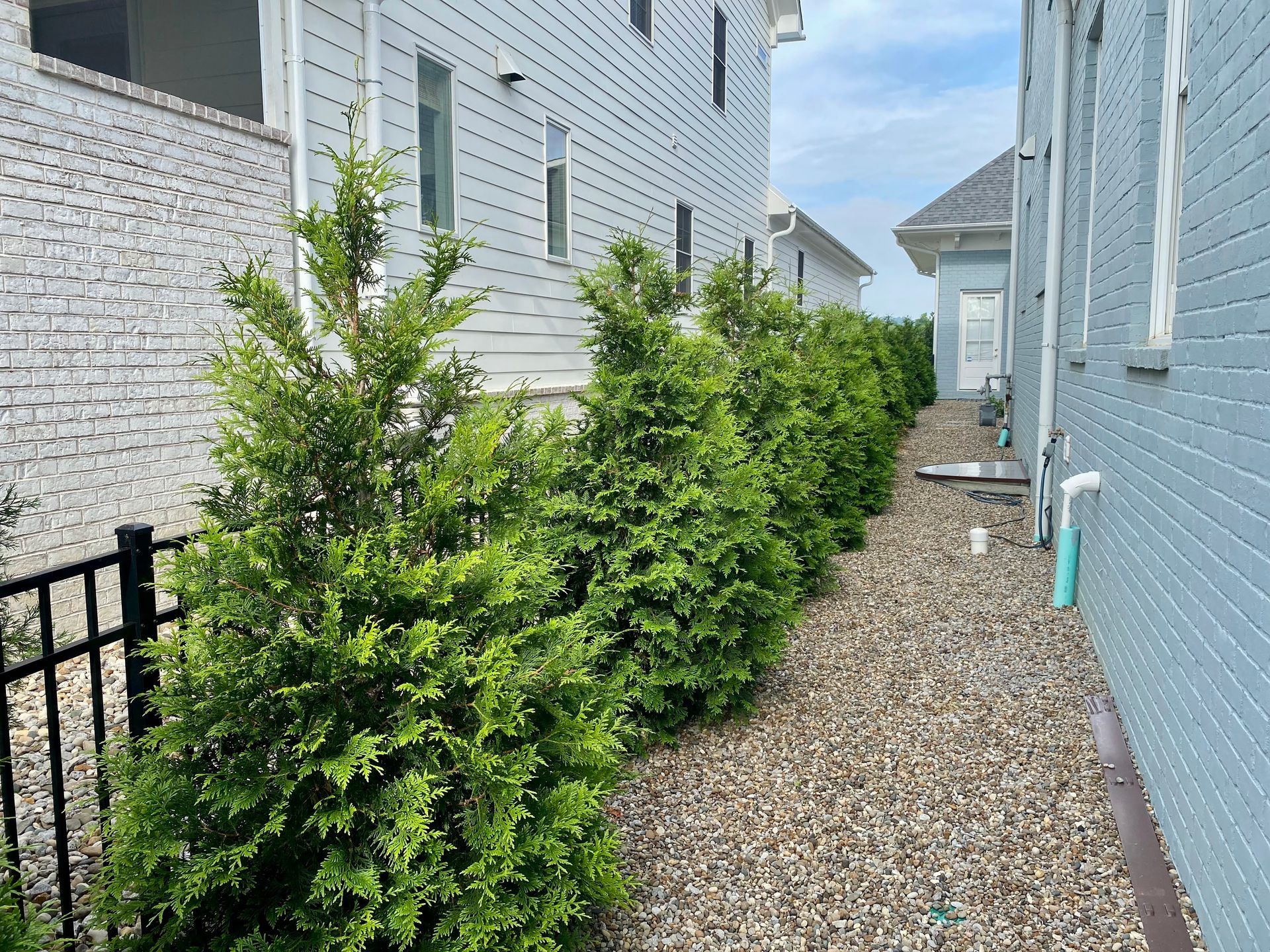
- Narrow lots: Choose column-shaped evergreens like arborvitae or inkberry, which stay under 1.5 m wide.
- Wide lots: Eastern red cedar and American holly fill space but need room to spread.
- Mixed borders: Pair a fast filler like arborvitae with a slow, long-lived native like American holly so the screen holds up after the fast grower declines.
- Small yards: Skip the tall trees. A single inkberry or a short switchgrass run screens a window without eating the yard.
DIY Privacy Fence Installation Tips for Beginners
A living screen and a fence solve different problems. Fences give instant privacy; plants soften the line and add greenery. Many yards benefit from both.
- Check property lines and any local height limits before buying materials
- Call 811 to mark underground utilities before you dig post holes
- Set posts below the frost line so winter heaving does not shift the fence
- Leave a gap between the fence and your plant row for airflow and access
Layering for Textural Interest and Year-Round Coverage
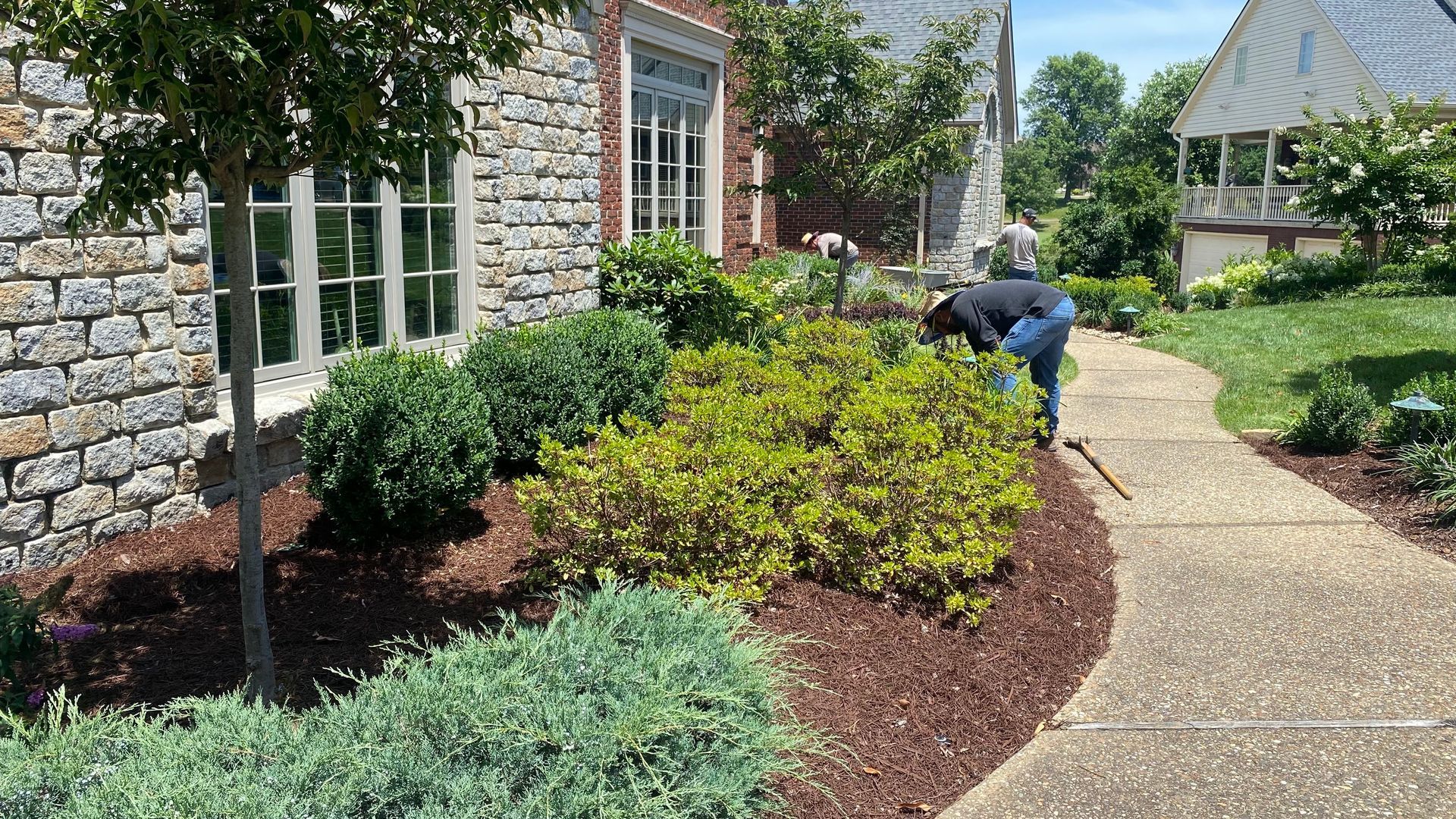
A single row of one plant looks flat and fails the moment that species has an off year. Layering fixes both problems. It also gives you year-round coverage instead of a screen that vanishes each winter.

Build the border in three tiers:
- Back layer: tall evergreens for the main screen and winter structure
- Middle layer: shrubs that add flowers, berries, and seasonal color
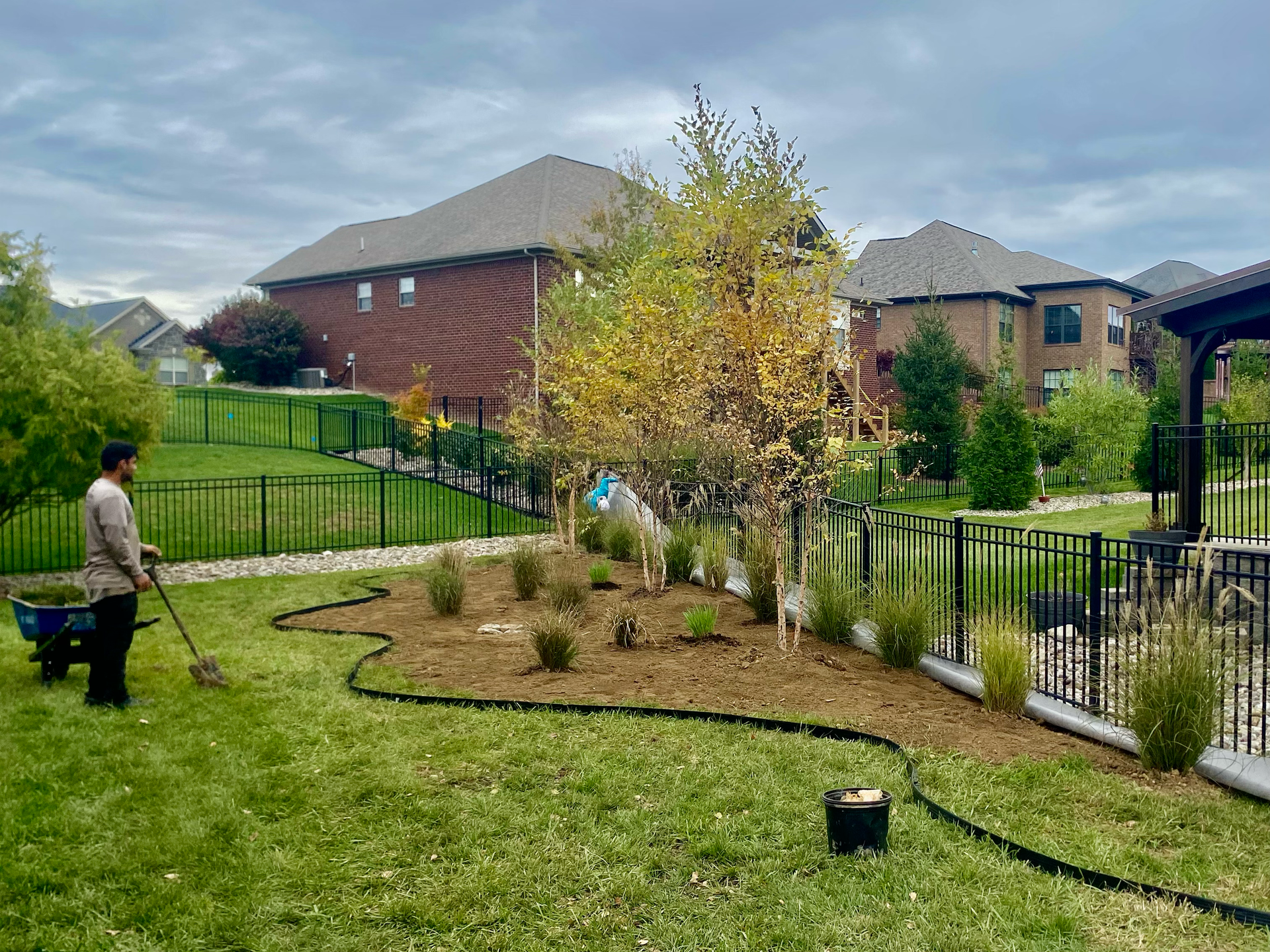
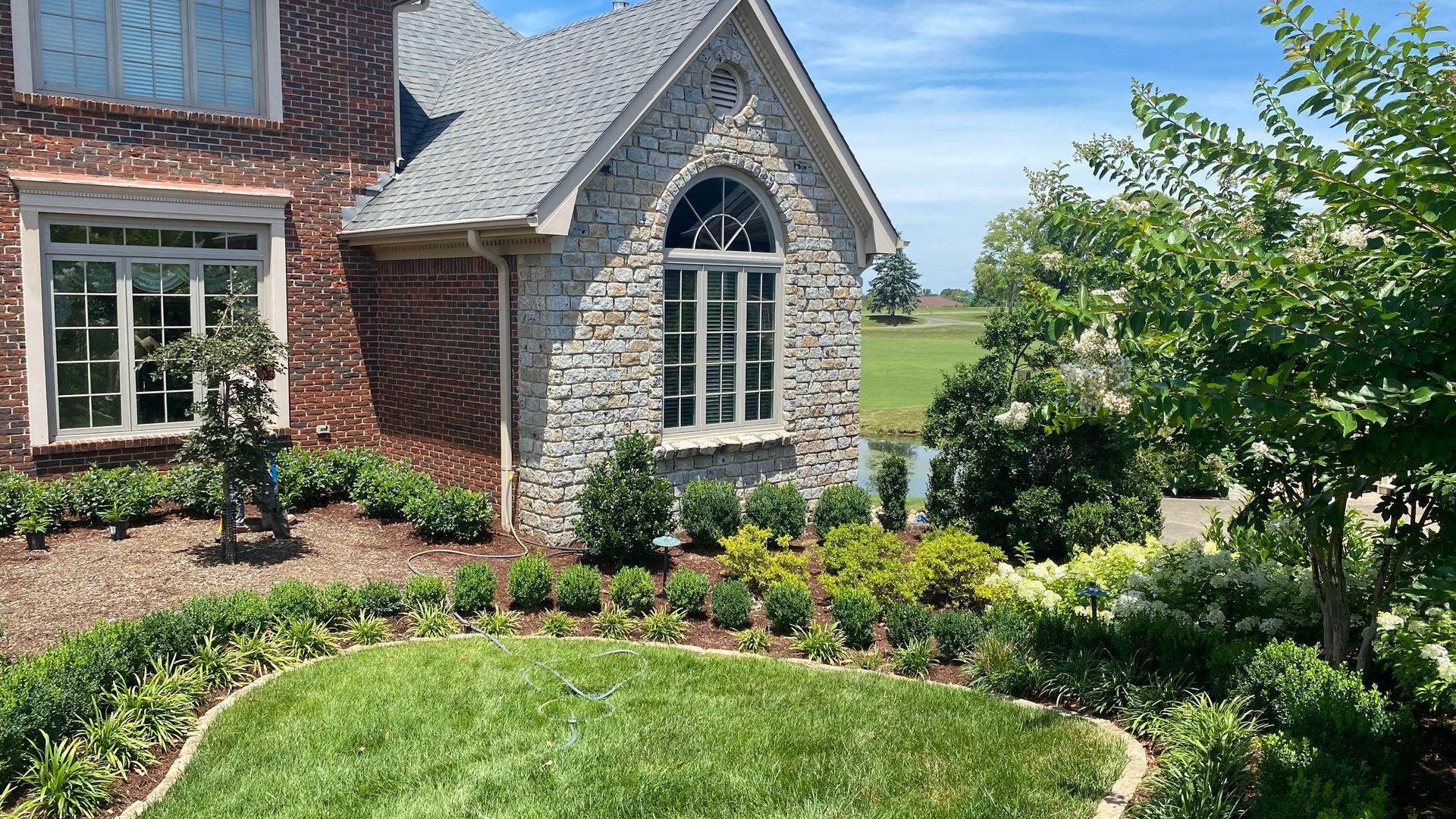
- Front layer: perennials and ornamental grasses for texture and movement
Small Yards and Oddly Shaped Lots: Making Privacy Plants Fit
Small or awkward lots do not need a full hedge. They need the right plant in the right spot. A narrow evergreen column can screen a window without eating the yard.
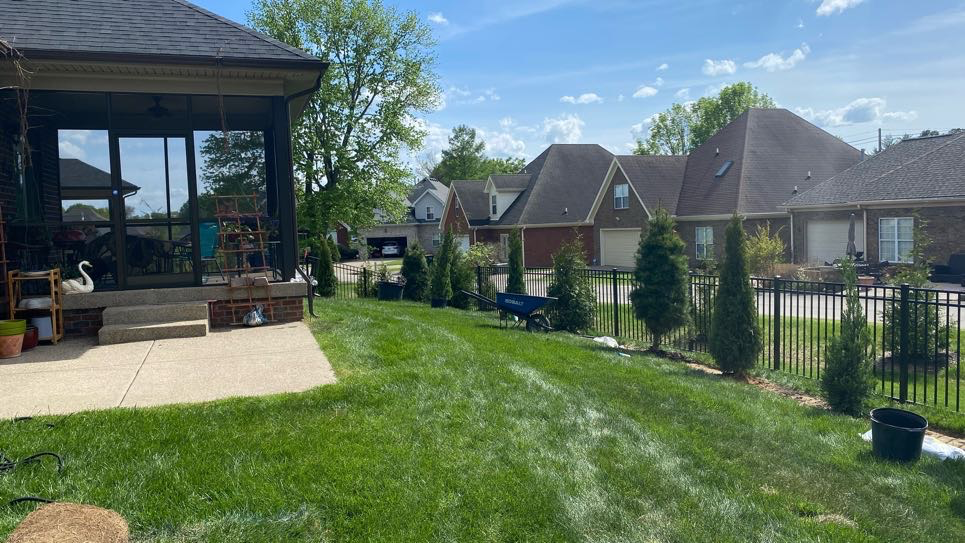
- Use column-shaped evergreens where width is limited
- Screen specific views, not the whole yard
- Keep a clear path for maintenance access
- Group plants in odd numbers for a natural look
Planting Along the Fence Line: Spacing, Soil, and Drainage
Planting along the fence line comes down to three things: spacing, soil, and water. Get these right and the screen mostly takes care of itself.
Frequently Asked Questions
What can I plant for immediate privacy in a Louisville yard?
Nothing gives instant full coverage, but you can close the gap fast. Start with a mix: plant 6 to 7 foot container-grown evergreens like eastern red cedar or 'Green Giant' arborvitae for the quickest screen, then fill in with faster native shrubs such as wax myrtle. Pair the planting with a simple wood privacy fence if you need screening this season. Growth still takes a few years, so plan the layout now and let the plants catch up.
What are some fast growing privacy trees in Kentucky?
Green Giant arborvitae, Leyland cypress, and eastern white pine are the workhorses for fast screening in Kentucky. Green Giant arborvitae can put on several feet per year once established in good silt-loam soil. Eastern red cedar is slower but tolerates drought and clay better. Match the tree to your sun exposure and soil drainage before you buy, because fast growth only happens when the roots are happy.
Are native privacy shrubs for Zone 6b better than non-native options?
Native shrubs for Zone 6b like inkberry holly, wax myrtle, and viburnum handle Louisville's clay-heavy, sometimes wet soil with less fuss. They also support local birds and pollinators, and many are more deer resistant. Non-natives like boxwood or Japanese holly can work, but they often need more watering and winter protection. A mixed hedge of natives with one or two reliable non-natives gives you the best of both.
How much space do I need between privacy plants?
Spacing depends on the mature width, not the size at purchase. Check the plant tag for mature width, then divide by two to get the minimum distance from the center of one plant to the next. For example, a shrub that matures at 6 feet wide should sit about 3 feet from its neighbor. Crowding plants for instant coverage leads to disease, dieback, and expensive pruning later.