
Table of Contents
- Why Low Maintenance Garden Beds Fit Louisville Yards
- What Makes a Garden Bed Truly Low Maintenance
- Native Plants for Kentucky Landscapes That Thrive Here
- Soil Amendment Tips for Clay Soil
- Mulching Techniques for Weed Control
- Hardscaping and Raised Beds to Cut Turf and Chores
- A Seasonal Garden Maintenance Schedule for Louisville
- DIY vs. Hiring a Professional for Garden Bed Installation
- Frequently Asked Questions
Last Updated: September 28, 2026
Why Low Maintenance Garden Beds Fit Louisville Yards
Low maintenance garden beds Louisville homeowners can actually keep up with start with the right plant choices, not with more weekend labor. This guide from Bluegrass Gardening covers what makes a bed genuinely easy to care for, which plants thrive in our climate, and how to build beds that look good year after year with minimal fuss.
The local climate does most of the work for you, if you let it. Louisville sits in USDA hardiness zones 6b and 7, with a humid subtropical climate that delivers hot, wet summers and freeze-thaw cycles in winter. That combination kills more plants than cold alone ever does.
A low maintenance garden bed is a planting area designed so that plants, soil, and mulch work together to suppress weeds, hold moisture, and survive seasonal swings with minimal intervention. The goal is a bed that needs a few hours of attention each season, not every weekend.
Most homeowners approach this backwards. They pick plants they like, plant them in whatever soil is there, and then spend years fighting the consequences. The better approach is to fix the soil and the layout first, then choose plants that suit both.
USDA Plant Hardiness Zone Map
What Makes a Garden Bed Truly Low Maintenance
A genuinely low maintenance garden bed meets three conditions: plants suited to the site, soil that drains well, and a mulch layer thick enough to block weeds. Miss any one of these and the bed demands constant attention.
Here's what separates a bed that takes care of itself from one that becomes a chore:
- Right plant, right place. A sun-loving perennial in shade will struggle forever, no matter how much you baby it.
- Dense planting. Bare soil grows weeds. Packed beds shade out competition.
- Deep mulch. Two to three inches of organic mulch suppresses most weed seeds and slows moisture loss.
- Grouped watering needs. Mixing thirsty plants with drought-tolerant ones means you water for the thirstiest plant in the bed.
- Evergreen structure. Something green in every season means the bed never looks bare or neglected.
The common mistake is treating these as separate tasks. They're one system. Fix the soil, plant densely with the right species, mulch properly, and maintenance drops to a few seasonal touch-ups.
Native Plants for Kentucky Landscapes That Thrive Here
Native plants for Kentucky landscapes are the backbone of a low-effort bed because they evolved here. They tolerate our clay soil, our humidity, and our temperature swings without supplemental care.
A few reliable choices for Louisville yards:
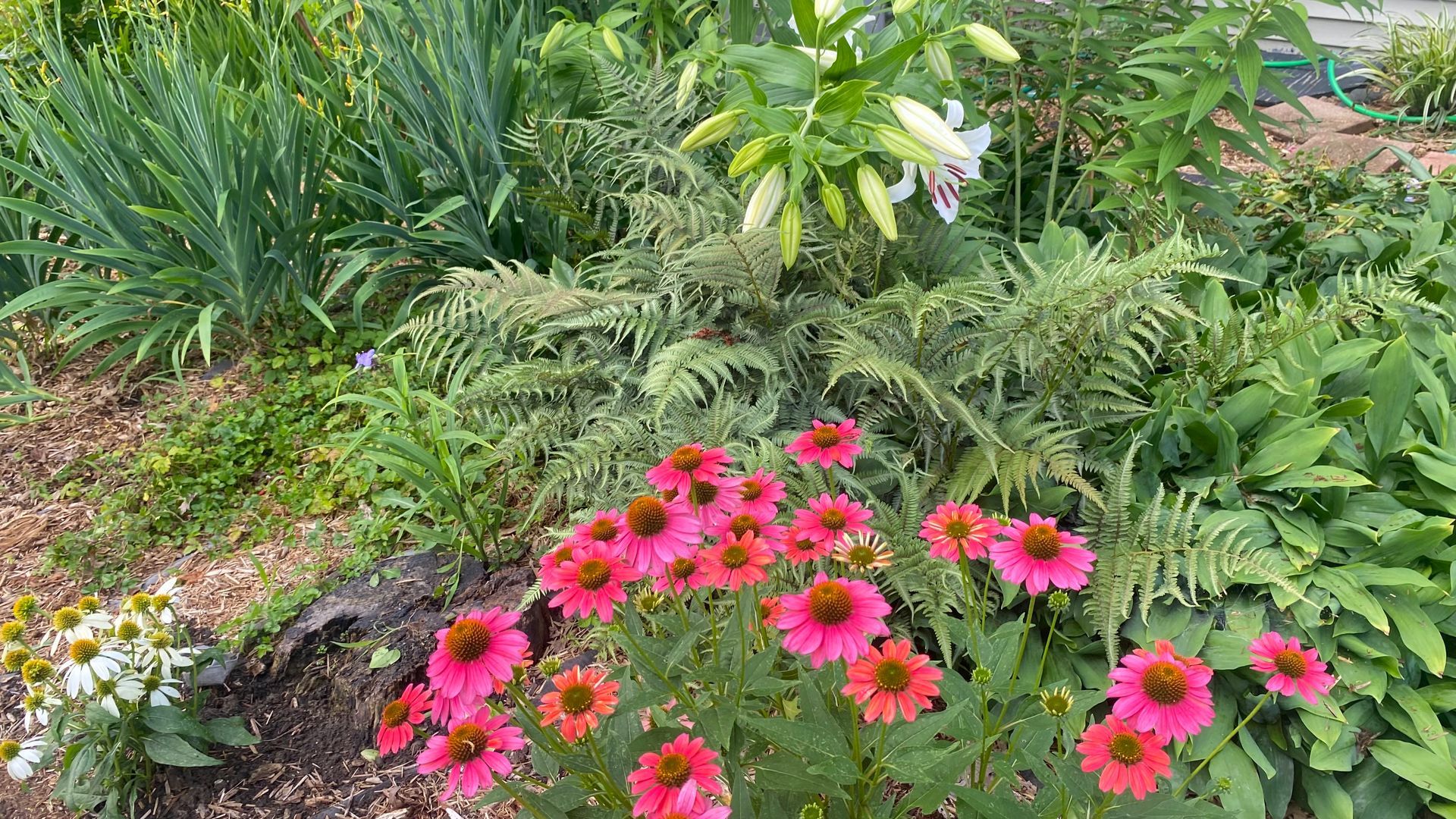
- Purple coneflower - drought-tolerant, feeds pollinators, self-seeds gently
- Black-eyed Susan - blooms through summer heat with almost no input
- Oakleaf hydrangea - native shrub with four-season interest and fall color
- Switchgrass - tall native grass that stands through winter
- Wild columbine - early bloomer for partial shade
Evergreens and Perennials for Year-Round Structure
Evergreens carry the bed through winter, while perennials handle the color. Boxwood, inkberry holly, and dwarf juniper give you green structure that never drops leaves. Layer perennials around them for seasonal bloom.
This pairing matters more than most guides admit. A bed of perennials alone looks dead for four months. Add three or four evergreens and the same bed reads as intentional all year.
Soil Amendment Tips for Clay Soil
Clay soil amendment starts with organic matter, and lots of it. Louisville's heavy clay holds water and compacts easily, which suffocates roots and causes the drainage problems so many local yards struggle with.
The fix is straightforward but takes patience:
- Spread two to three inches of compost over the bed area.
- Till or fork it into the top six to eight inches.
- Avoid working wet clay, which creates hard clods.
- Test drainage by digging a hole, filling it with water, and checking how fast it empties.
- Repeat compost applications annually to keep structure improving.
Never amend clay with sand alone. That combination creates something closer to concrete. Organic matter is what changes clay's behavior over time.
Mulching Techniques for Weed Control
Mulching techniques for weed control come down to depth, material, and timing. Two to three inches of shredded bark or leaf compost blocks most weed seeds from germinating and holds soil moisture through summer.
Apply mulch in spring after soil warms, and top it up in fall. Keep mulch a couple of inches away from plant stems and tree trunks to prevent rot.
Hardscaping and Raised Beds to Cut Turf and Chores
Hardscaping and raised beds reduce the square footage you mow, edge, and water. Replacing turf with stone paths, gravel borders, or raised planting areas cuts maintenance while adding structure to the yard.
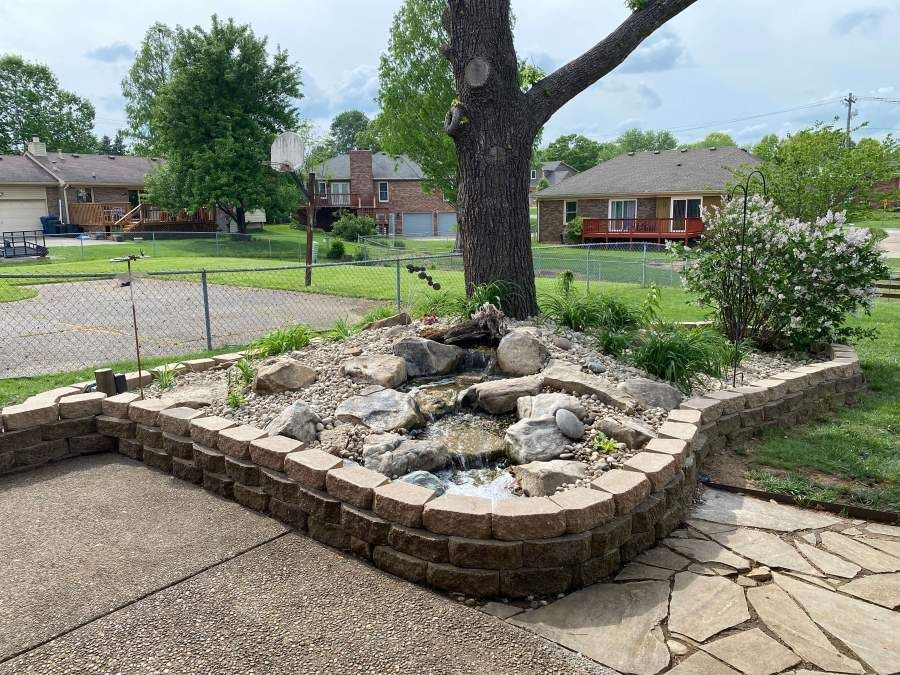
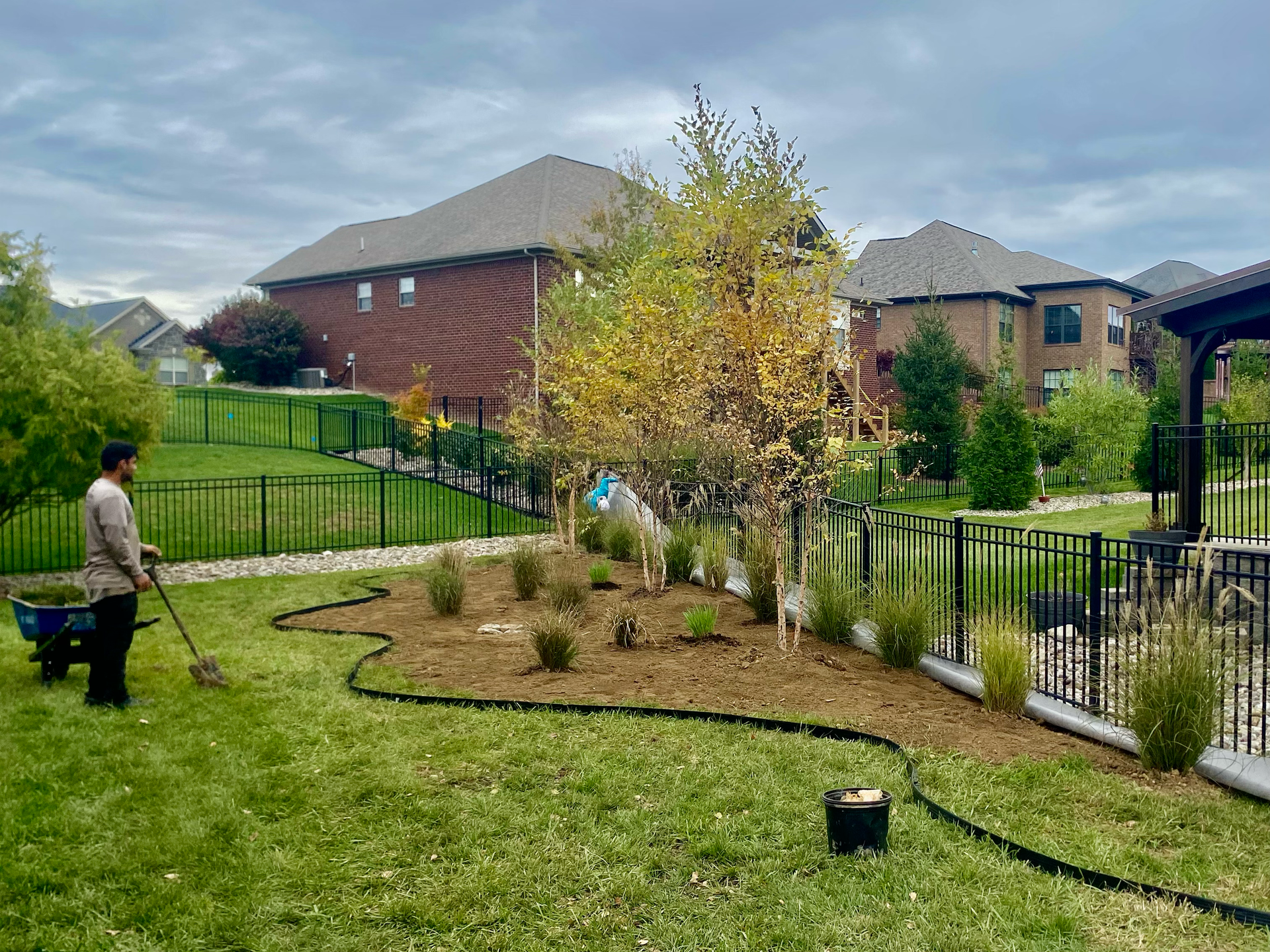
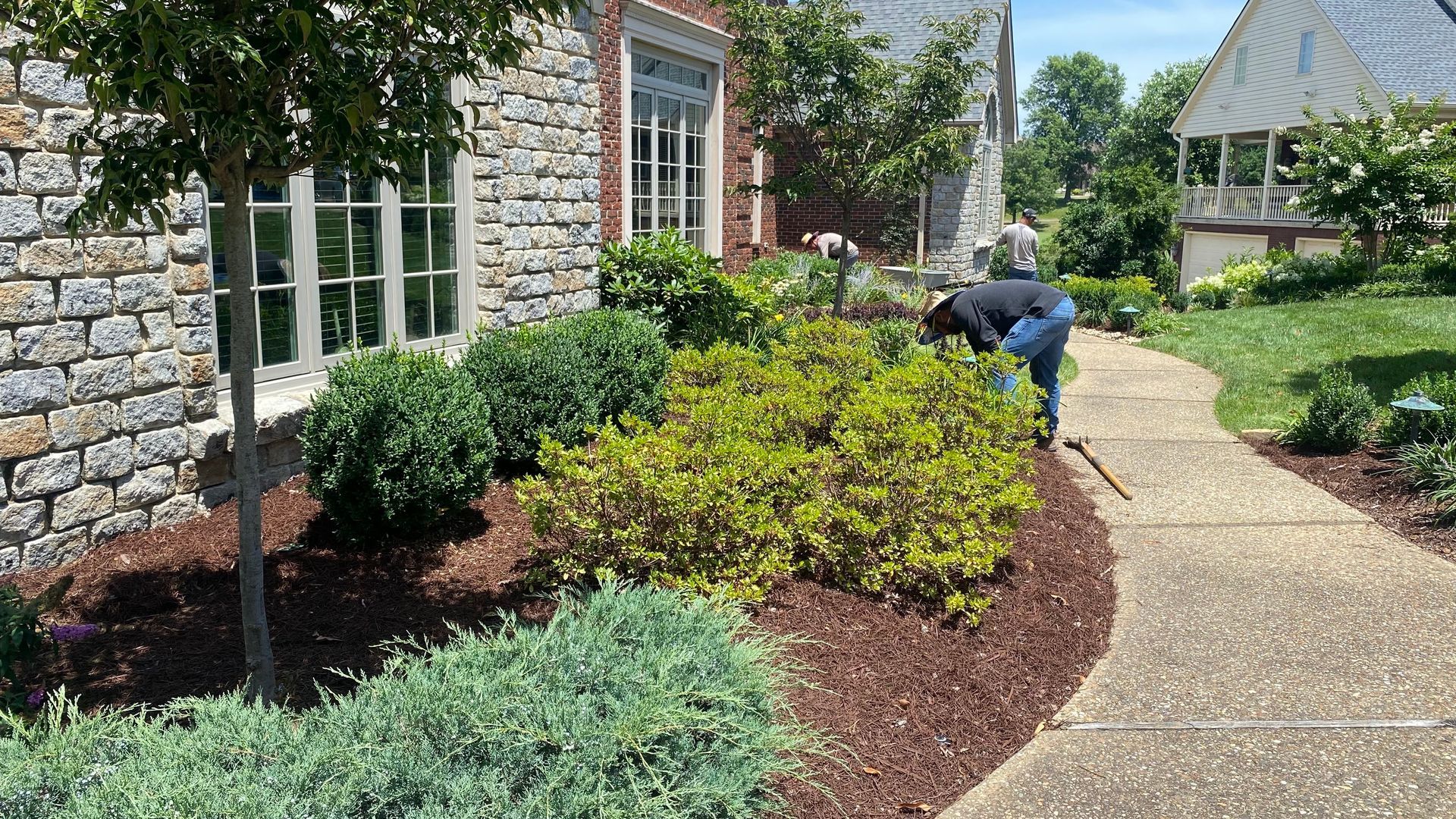
Landscaper planting native perennials in a raised bed for a low maintenance garden with stone pathways.
A Seasonal Garden Maintenance Schedule for Louisville
A seasonal garden maintenance schedule keeps a low-maintenance bed low-maintenance. Without one, small tasks pile up into a full weekend of catch-up work. The version below is built around our actual weather patterns, not a generic four-season template.
| Month |
What to Do |
Time |
|---|---|---|
| March |
Cut back last year's perennial stems, pull winter weeds, check for frost heave on new plantings |
2 hours |
| April |
Top up mulch to 2-3 inches, divide crowded perennials once new growth shows, plant new additions after the freeze risk passes |
4-6 hours |
| May |
First pest scouting pass, thin seedlings from self-seeders, edge bed lines |
1-2 hours |
| June |
Deep water during dry stretches, deadhead early bloomers to push a second flush |
1-2 hours |
| July |
Watch for Japanese beetles and aphids, spot weed, skip fertilizer on established plants |
1-2 hours |
| August |
Light shaping of shrubs, let spent blooms stand for seed heads and birds |
3 hours |
| September |
Best planting month of the year, add compost to bare spots, refresh mulch edges |
5-7 hours |
| October |
Plant spring bulbs, cut back only what looks messy, leave seed heads for winter interest |
2 hours |
| November |
Final mulch top-up, clean and store tools, note what underperformed |
3-4 hours |
| December-February |
Light pruning of evergreens on mild days, plan next year's changes indoors |
2 hours |
A few patterns worth knowing:
- Japanese beetles emerge in late June and feed for about six weeks. Hand-pick them into soapy water in the early morning when they're sluggish. Healthy, well-watered plants shrug off moderate damage.
- Aphids cluster on new growth in May and June. A strong spray of water knocks them back without any product.
- Powdery mildew shows up on crowded perennials in humid August. Thin the bed so air moves and the problem usually fades.
- Slugs do their damage after rain in spring. A thin layer of coarse mulch makes the surface less inviting.
DIY vs. Hiring a Professional for Garden Bed Installation
DIY garden bed installation works well for small, simple beds where soil is already reasonable. Professional installation makes more sense when drainage is poor, the yard is oddly shaped, or the design needs to solve a structural problem. The trick is knowing which situation you're in before you start digging.
- Does water stand in the yard for more than a day after heavy rain? If yes, drainage is the real project, and it comes before planting.
- Is the bed larger than about 100 square feet? Bigger beds multiply the soil work, the plant count, and the margin for error.
- Is the space irregular, sloped, or wrapped around a structure? Odd shapes need a plan, not a plant list.
- Do you already know which plants work in your light and soil? If not, you'll learn by losing plants.
- Can you commit two full weekends this season? If not, a phased approach beats a rushed one.
Frequently Asked Questions
What are the best low-maintenance plants that can grow in Kentucky?
Look for plants suited to USDA hardiness zones 6b and 7, which cover most of the Louisville area. Native perennials such as coneflower, black-eyed Susan, and switchgrass handle the humid summers and freeze-thaw winters without much fuss. Evergreens like inkberry and dwarf holly add winter structure. Once established, these plants need little watering or pruning, which is what keeps a low maintenance garden bed easy to care for.
How do I prepare clay soil for a new garden bed?
Clay soil holds water and compacts easily, so start by digging or tilling to loosen it. Mix in several inches of organic matter such as compost or aged leaf mold, and avoid working the soil when it is wet. Raising the bed a few inches improves drainage further. A soil test through your county extension office tells you exactly what amendments to add, so you are not guessing.
What is the best mulch for suppressing weeds in garden beds?
A two to three inch layer of shredded hardwood or pine bark mulch blocks most weed seeds from sprouting. Keep mulch a few inches away from plant stems and tree trunks to prevent rot. Reapply in spring as the old layer breaks down. Mulching also holds moisture and moderates soil temperature, which matters through Louisville's freeze-thaw cycles.
How can I design a garden bed that requires minimal pruning?
Choose plants with a naturally compact shape, then space them according to their mature size so they do not crowd each other. Group plants with similar needs together, and repeat a few species rather than collecting many. Add a clean edge or stone border so the bed holds its shape. The right layout means most of your upkeep is a quick spring cutback and light touch-ups.
Getting a low maintenance garden bed right comes down to solving the soil and drainage problems first, then choosing plants that suit the site. Bluegrass Gardening can handle the design, installation, and seasonal upkeep, from garden design and planting to hardscaping and long-term maintenance. Contact us to start with a yard assessment and a plan built for your property.