
Table of Contents
- Signs of Hydrangea Heat Stress vs. Disease
- Why Hydrangea Leaves Turn Brown: 6 Common Causes
- How to Fix Brown Hydrangea Leaves: Step-by-Step
- Preventing Summer Damage: Mulch, Water, and Shade
- When to Deadhead Hydrangeas for Better Blooms
- Hydrangea Deadheading Guide: 8 Popular Types
- Frequently Asked Questions
Last Updated: September 30, 2026
Signs of Hydrangea Heat Stress vs. Disease
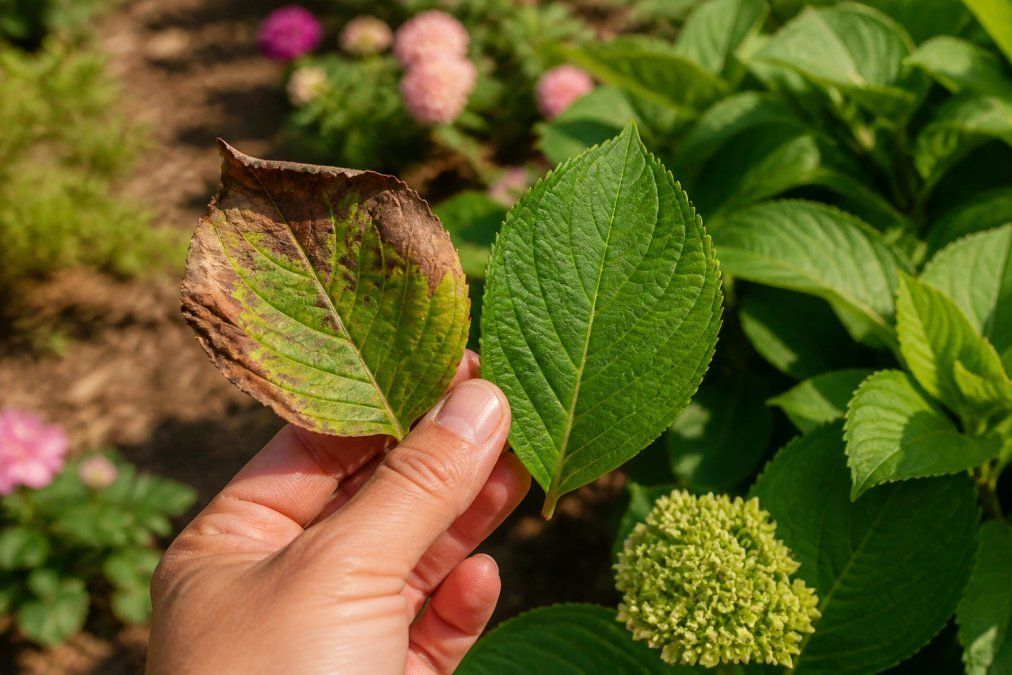
When hydrangea leaves brown in summer, the pattern of the damage tells you what's wrong, and learning to read it starts with the first sign of hydrangea leaves brown. Heat stress usually hits the outer edges first, while disease tends to show up as spots.
Here's the difference in plain terms. Heat stress dries the leaf from the outside in, leaving crisp brown edges and a yellow halo between the dead and healthy tissue. Disease starts as spots, rings, or blotches anywhere on the leaf, often with a dark border.
Quick Visual Check: Crispy Edges or Spotted Leaves?
Crispy, uniform edges point to water loss. Spotted, patchy leaves point to a pathogen.
Use this quick table to sort out what you're seeing:
| What You See |
Most Likely Cause |
First Fix |
|---|---|---|
| Crispy brown edges, dry soil |
Underwatering |
Deep watering |
| Yellow leaves, soggy soil |
Overwatering |
Let soil drain |
| Spots with dark borders |
Fungal infection |
Improve airflow |
| Brown patches between veins |
Sunburn |
Afternoon shade |
| Yellow with green veins |
Nutrient issue |
Soil test |
At Bluegrass Gardening, we see this constantly in Louisville yards: homeowners water more when the problem is actually drainage, and the plant gets worse.
Why Hydrangea Leaves Turn Brown: 6 Common Causes
Six problems cause most summer browning. The fix depends on which one you have, so diagnose before you act. Each cause below leaves a slightly different fingerprint on the leaf, and learning those fingerprints is the fastest way to stop guessing.
1. Watering Problems: Drought Stress and Overwatering
Both too little and too much water cause brown leaves, and they look surprisingly similar at first.
Drought stress happens when the root zone dries out. The plant pulls water from the leaf edges to survive, so those edges turn brown and crispy. The browning moves inward in a fairly even band, and the soil two inches down feels dry and crumbly. Overwatering is the opposite problem: soggy roots can't take up oxygen or nutrients, so leaves yellow and brown while the soil stays wet. With overwatering, the browning tends to be softer and more scattered, and the lower leaves go first.
Check the soil two inches down before you water. If it's damp, wait. If it's dry, water deeply. A simple moisture meter takes the guesswork out of this and costs less than a single replacement plant.
2. Sunburn and Heat Stress
Hydrangeas in the bigleaf group evolved as understory plants, which is why strong afternoon sun burns them. Sunburn shows up as brown patches between the veins, usually on the leaves facing the sun, and it appears fast, often within a day or two of a heatwave. The damaged tissue feels papery and dry, but the soil around the plant may still be moist, which is the tell that separates sunburn from drought stress.
3. Fertilizer Burn
Too much fertilizer pulls water out of the roots through a process called reverse osmosis. The result is brown, scorched leaf margins that look like drought damage even when the soil is wet. If you fed the plant recently and the tips and edges browned within a week, fertilizer burn is the likely cause. Stop feeding and flush the soil with several deep waterings to push the excess salts below the root zone.
4. Poor Soil Drainage
Heavy clay soil holds water like a bathtub. Roots sitting in saturated soil suffocate and rot, and the plant shows it as wilting during the day followed by yellowing and browning leaves. If your plant wilts even when the soil is wet, drainage, not water volume, is the problem.
5. Fungal Disease
Fungal leaf spot starts as small dark spots with purple or brown borders, then spreads. It thrives when foliage stays wet overnight and air can't move through the plant. Unlike heat stress, which hits edges first, disease spots appear anywhere on the leaf, often with a target-like ring pattern. Improve airflow by thinning crowded stems and water at the base so the leaves stay dry.
6. Wind and Environmental Exposure
Hot, dry wind pulls moisture from leaves faster than roots can replace it, so the leaf edges dry and brown even when the soil is fine. Plants in exposed corners or along a hot wall show this most. A windbreak shrub or a temporary screen on the windward side solves it.
A Note on Varietal Sensitivity
Not all hydrangeas handle heat the same way, and this is the piece most guides skip. Bigleaf (macrophylla) and lacecap types are the most heat-sensitive and brown first in full sun. Panicle hydrangeas handle heat and sun far better and rarely show sunburn. Oakleaf types sit in the middle: they tolerate more sun than bigleafs but still appreciate afternoon shade. If one plant browns every summer while its neighbor stays green, the variety, not your care, may be the deciding factor.
How to Fix Brown Hydrangea Leaves: Step-by-Step
Match the fix to the cause. Most stressed hydrangeas recover within a few weeks if you correct the root problem.
Follow these steps:
- Check soil moisture two inches down before watering.
- Water deeply at the base, not the leaves, in the morning.
- Test your soil for drainage and pH.
- Move the plant or add shade cloth if sun is the issue.
- Stop fertilizing if you suspect burn, then flush the soil.
- Remove diseased leaves and improve airflow.
- Add mulch to hold moisture and cool the root zone.
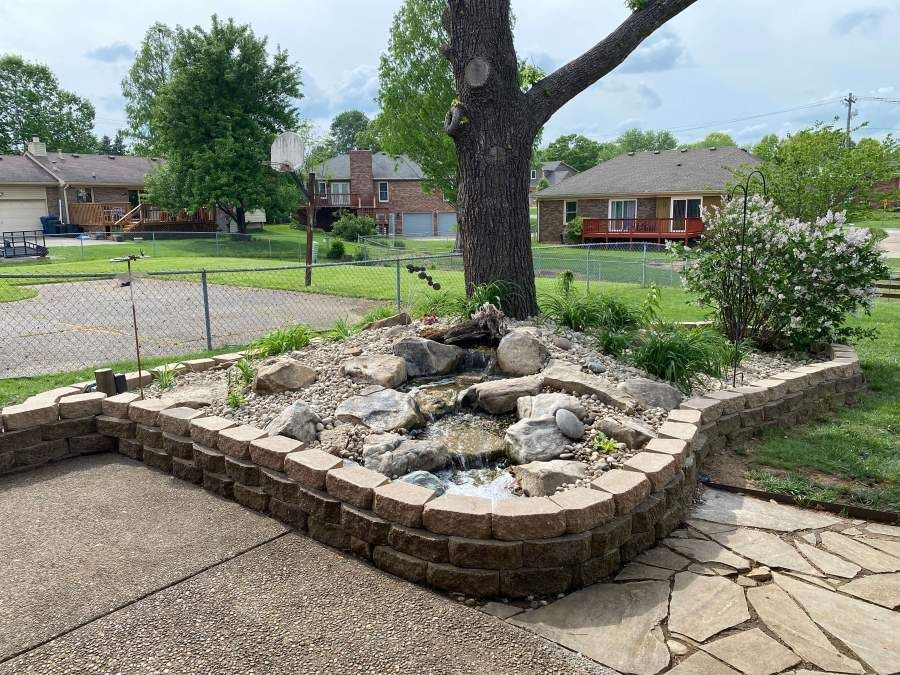
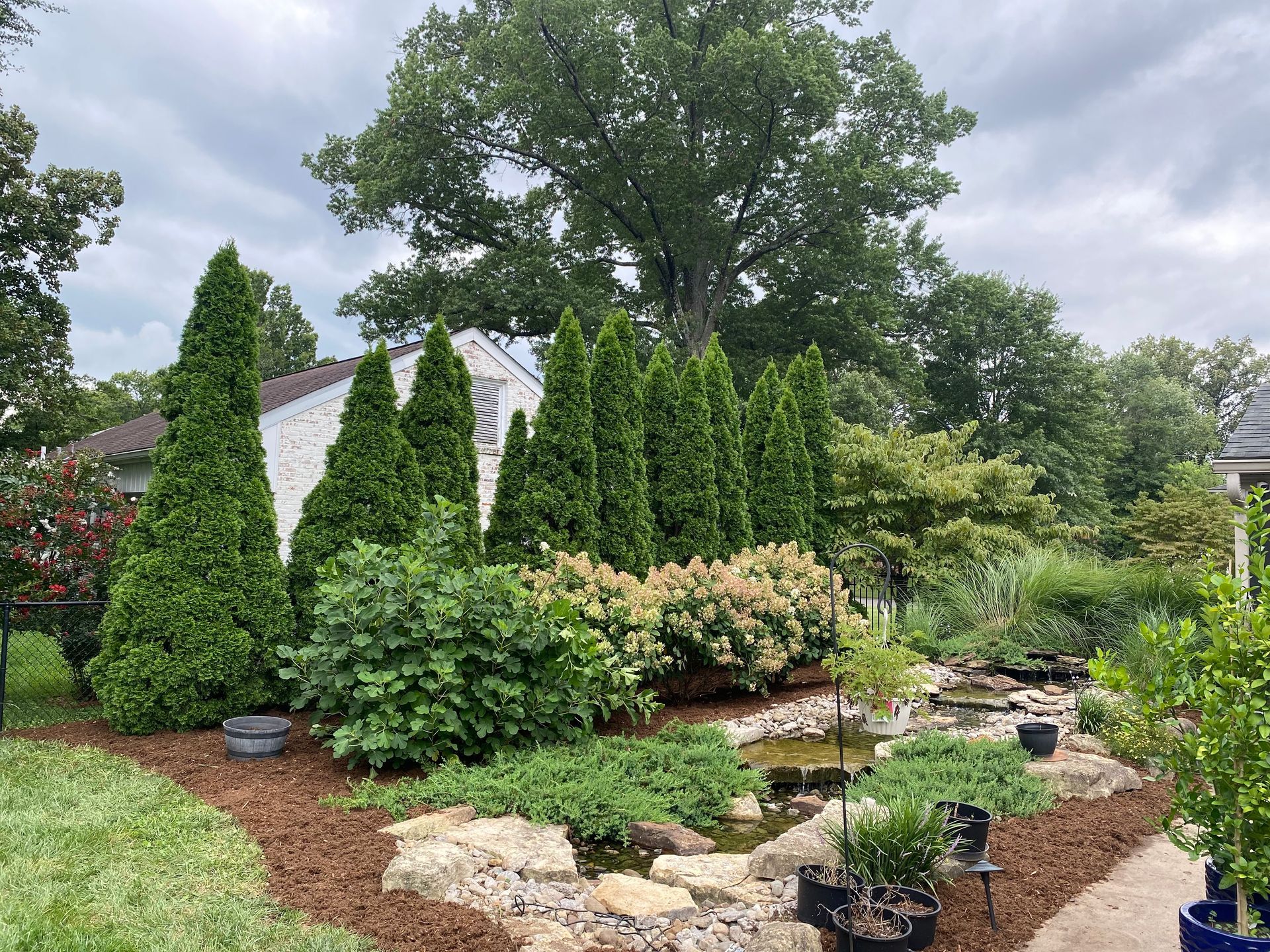
For plants that stay wet no matter what, the real fix is drainage. That's where professional help pays off. Bluegrass Gardening handles landscape and garden design and drainage work for yards that won't dry out.
Preventing Summer Damage: Mulch, Water, and Shade
Prevention beats repair. A few simple habits keep hydrangeas green through the hottest weeks, and the details matter more than most people realize.
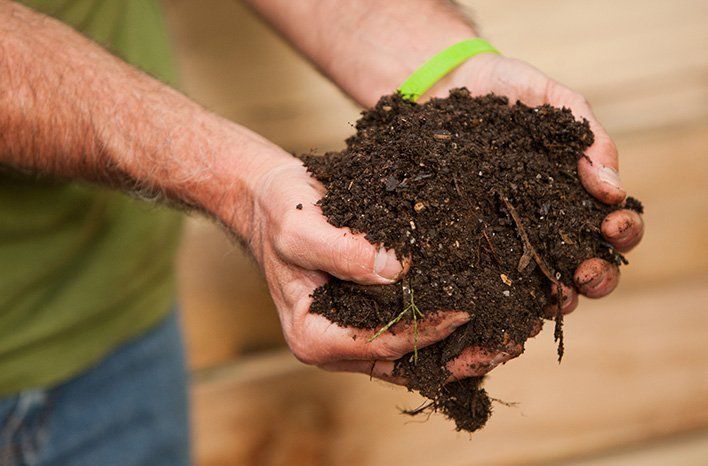
Mulch is the biggest win, but depth is where people go wrong. Aim for a two-to-three-inch layer of organic material. Pine bark nuggets and shredded hardwood both work well and break down slowly. Straw is fine in a pinch but mats down and sheds water. Keep the mulch a few inches back from the stem so it doesn't trap moisture against the crown, which invites rot. A layer thinner than two inches won't hold soil temperature down; a layer thicker than four inches can smother roots and keep water from reaching them.
Deep watering once or twice a week beats a daily sprinkle. A daily light watering only wets the top inch of soil, so roots stay shallow and dry out fast in heat.
When to Deadhead Hydrangeas for Better Blooms
Deadheading is one of the most overlooked ways to keep hydrangeas healthy. Removing spent blooms sends energy back into the plant instead of into seed production, which means stronger growth and often a second flush of flowers.
How to Deadhead Properly
Deadheading is simple when you follow the stem.
- Find a spent flower.
- Follow its stem down to the first set of healthy leaves or a strong side bud.
- Cut just above that point with clean pruners.
- Remove any dead or diseased leaves at the same time.
- Sterilize your pruners between plants.
Hydrangea Deadheading Guide: 8 Popular Types
The right timing depends on your variety. Here are eight popular types and when to deadhead each.
| Hydrangea Type |
Blooms On |
Best Time to Deadhead |
|---|---|---|
| Bigleaf (mophead) |
Old wood |
Right after summer bloom |
| Lacecap |
Old wood |
Right after summer bloom |
| Oakleaf |
Old wood |
Late summer, after bloom |
| Climbing |
Old wood |
After flowering |
| Smooth |
New wood |
Late winter to early spring |
| Panicle |
New wood |
Late winter to early spring |
| Annabelle |
New wood |
Late winter to early spring |
| Mountain |
Old and new wood |
Light trim after bloom |
Clemson Cooperative Extension on hydrangea care
Frequently Asked Questions
How do you fix brown leaves on hydrangeas?
First, check soil moisture: if dry, water deeply; if soggy, improve drainage. Remove badly damaged leaves, apply mulch to cool the root zone, and shield from afternoon sun with shade cloth. Avoid fertilizing until new growth appears. Most hydrangeas recover within a few weeks if the cause is environmental, not disease.
What does an overwatered hydrangea look like?
Overwatered hydrangeas show yellowing leaves that may turn brown and mushy, often starting at the bottom. Wilting occurs despite wet soil. Roots may rot, causing stunted growth. Check soil drainage; if water pools, amend with organic matter. Let the top inch of soil dry before watering again.
Will hydrangeas come back after turning brown?
Yes, if the roots are healthy. Brown leaves from heat stress or sunburn can be replaced by new growth once conditions improve. Cut back dead stems in early spring. If the entire plant is brown and stems snap easily, it may be dead. Most hydrangeas regrow from the base.
Is fertilizer beneficial for hydrangeas during the summer?
Avoid fertilizing in peak summer heat, as it can stress plants and cause fertilizer burn, leading to brown leaf margins. If growth is poor, apply a slow-release balanced fertilizer in early spring. For summer, focus on consistent watering and mulch instead.
Summer browning is usually a fixable problem, not a lost plant. Diagnose the cause, correct the watering and soil, and deadhead on the right schedule for your variety. If your yard has drainage issues or plants that keep struggling no matter what you try, Bluegrass Gardening can help. Our team offers garden design, plant care, and seasonal landscape maintenance built around long-term results. Get started with Bluegrass Gardening and turn a stressed landscape into one that thrives.