
Table of Contents
- Why Compost Installation Matters for Your Landscape
- How Professional Compost Installation Works
- Organic Soil Amendment Services: What to Expect
- Winter Landscape Preparation and Compost Timing
- Professional Perennial Maintenance After Compost Installation
- Common Mistakes Homeowners Make With Compost
- Frequently Asked Questions
Last Updated: September 30, 2026
Why Compost Installation Matters for Your Landscape
Compost installation is the process of incorporating decomposed organic matter into existing soil to improve its structure, drainage, and nutrient-holding capacity. At Bluegrass Gardening, we treat it as the foundation step of any landscape renovation, because soil quality decides how well everything planted afterward will grow. This guide covers how professional compost installation works, what organic soil amendment services include, and how to time the work around winter.
Most homeowners judge a yard by what they can see: the shrubs, the beds, the edges. The real story sits underneath. Heavy clay soil, common across older residential lots, drains slowly, compacts hard in summer, and holds onto water in low spots long after rain stops. Compost fixes that at the root. It opens up the soil, feeds the microorganisms that break down organic matter, and helps water move where it should.
The difference between spreading a thin layer on top and doing a proper installation comes down to depth, incorporation, and timing. Get those three right and you change the growing conditions for everything on the property.
How Professional Compost Installation Works
Professional compost installation follows a defined sequence: assess the site, test the soil, correct drainage where needed, then incorporate compost to the right depth for what will grow there. Skipping the assessment stage is the most common reason a compost application underperforms.
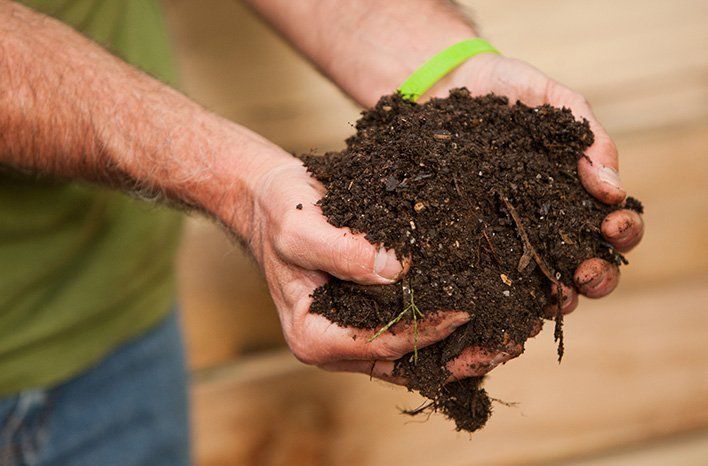
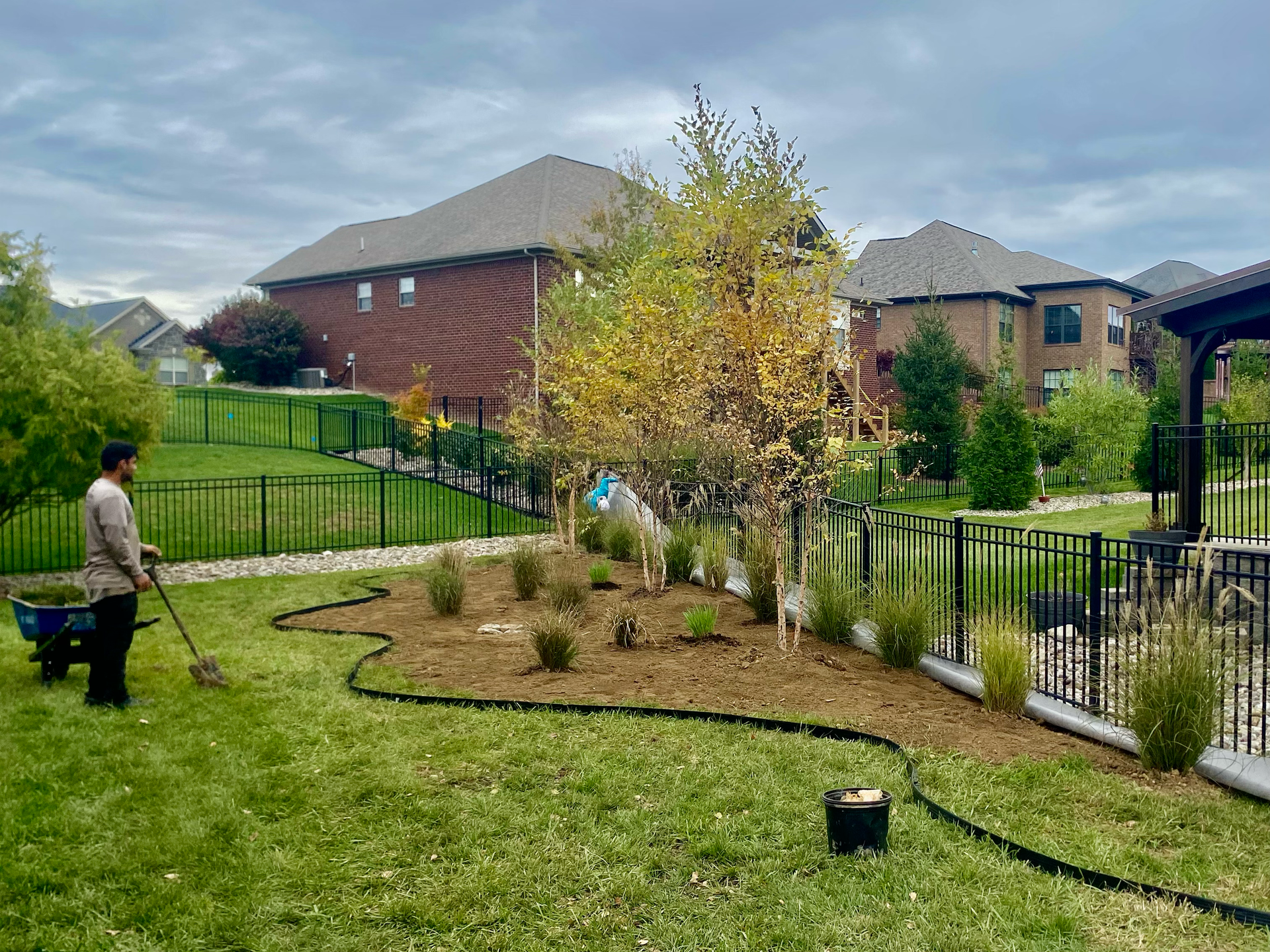
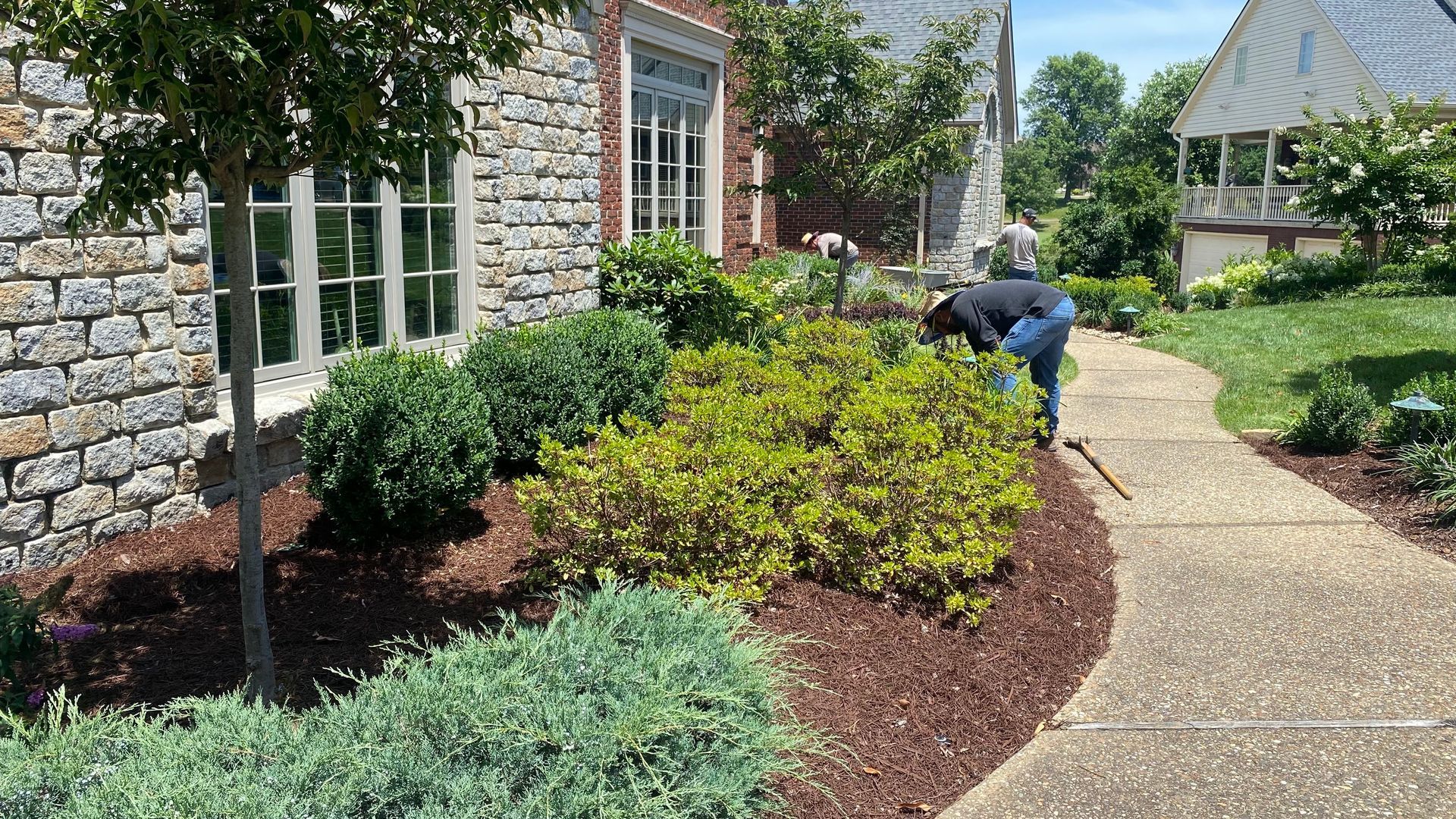
Landscaper using a shovel for a professional compost installation in a residential garden bed
Site Assessment and Soil Testing
A site visit starts with how water behaves on the property. Where does it pool after a storm? Which beds stay wet for days? Are there downspouts dumping into planting areas? A soil test then tells us the starting point: pH, organic matter content, and drainage characteristics. That combination determines how much compost the soil actually needs and how deep it should go.
For yards with persistent wet spots, the assessment also flags whether drainage correction has to happen before any compost goes down. Adding organic matter to a bed that already holds standing water just makes mud.
How Deep the Compost Goes
Depth is where most installations succeed or fail, and it depends on what is growing there and what the soil is made of.
- Existing beds being renovated: one to two inches of finished compost worked into the top four to six inches of native soil. This blends the two materials rather than creating a distinct layer.
- New planting beds: two to three inches incorporated to a depth of eight to twelve inches, so roots have amended soil to move through as they establish.
- Heavy clay: the higher end of those ranges, because clay needs more organic matter to open up its structure.
- Sandy soil: the lower end, since sandy ground already drains well and too much compost can make it hold more water than the plants want.
The goal is a blend, not a layer.
Application Methods and Timing
Application method depends on the goal. For renovating an existing bed, we spread compost evenly and work it into the top several inches of soil so it blends with the native material rather than sitting as a separate layer. For new beds and planting areas, compost gets incorporated deeper to give roots room to establish.
Adjusting the Approach to Your Climate
Generic advice assumes mild, evenly wet conditions. Most yards are not that, and the installation has to change with the climate.
Organic Soil Amendment Services: What to Expect
Organic soil amendment services cover the full job: soil testing, material selection, incorporation, and a plan for what gets planted afterward. The material itself is only one line item. How it is worked into the ground, and what happens in the weeks after, decides the result.
A typical engagement runs in stages:
- Soil testing and site assessment to establish baseline conditions
- Drainage evaluation for wet or compacted areas
- Compost selection matched to soil type and intended planting
- Incorporation to the correct depth for beds, borders, or planting areas
- Follow-up guidance on watering and settling
Winter Landscape Preparation and Compost Timing
Winter landscape preparation is the work that protects a yard through the cold months and sets it up for a strong spring. Compost installation belongs in that window, and so does the structural work: perennial cut back, tree trimming, and clearing out spent growth before the first hard freeze.
Professional Perennial Maintenance After Compost Installation
Professional perennial maintenance is what keeps a composted bed performing after the installation crew leaves. Compost changes soil structure, but it does not stay put on its own. Beds settle, organic matter continues to break down, and mulch thins out over a season.
| Timing |
Task |
Why It Matters |
|---|---|---|
| Late fall |
Perennial cut back and bed cleanup |
Removes pest and disease cover before winter |
| Late fall |
Compost incorporation |
Soil is still warm enough for breakdown |
| Winter |
Dormant tree trimming |
Less stress on trees, less damage to beds |
| Early spring |
Mulch top-up and bed leveling |
Stabilizes moisture as growth restarts |
| Mid-season |
Inspection of drainage and settling |
Catches wet spots before they damage roots |
Common Mistakes Homeowners Make With Compost
The biggest mistake is treating compost as a surface product. Compost spread thin and left on top of the soil looks tidy but does very little for drainage or root health. It has to be incorporated to make a real difference.
A few others we see regularly:
- Applying to waterlogged ground. If a bed holds standing water, drainage has to be addressed first. Compost on top of a wet spot just creates a wetter spot.
- Using unfinished material. Actively decomposing compost can damage young plants. Finished compost is the safe choice for beds that will be planted soon.
- Installing at the wrong time of year. Frozen or waterlogged soil will not incorporate properly, and the work gets wasted.
- Skipping the soil test. Without a baseline, there is no way to know how much organic matter the soil actually needs.
- No plan for afterward. Compost is a starting point. Without a maintenance schedule, beds revert to their old condition within a few seasons.
The Pest Problem Nobody Plans For
This is the gap most guides skip. Freshly amended soil is soft, warm, and full of the organic matter that rodents, moles, and voles are looking for. A bed that was hard clay last season becomes an easy place to dig.
- A buried barrier at the bed edge. Hardware cloth, a stiff wire mesh, set vertically along the border of the bed and buried several inches below the surface, stops animals from tunneling in from the side. It has to go in before the compost is worked into the soil, because digging it in afterward disturbs everything.
- Keep the compost fully incorporated. A loose layer of fresh material on top is an open invitation. Once it is blended into the soil, it is far less attractive.
- Don't leave gaps at the edges. Animals find the seam between amended soil and untouched ground. Overlap the barrier where sections meet.
- Watch the first few weeks. Most digging happens right after installation, while the soil is still soft and the scent of fresh organic matter is strong. A quick check after a week catches problems early.
Settling and What to Expect After
What is worth watching:
- Low spots that hold water. If a dip forms after settling, it can collect water and drown roots. A light top-up and leveling in spring fixes it.
- Mulch thinning. Mulch breaks down along with the compost. A spring top-up keeps moisture steady and holds weeds down while perennials fill in.
- Uneven moisture. Newly amended soil holds water differently than the surrounding ground, so watering has to be adjusted rather than run on the old schedule.
If the goal is a yard that holds up over years rather than one season, the soil work has to come first and the maintenance has to follow. Bluegrass Gardening handles both, from the initial soil assessment through seasonal upkeep, so the improvement actually lasts.
Frequently Asked Questions
Do I just put compost on top of soil?
Compost installation involves more than spreading a layer on top. Professionals typically incorporate compost into the top 6 to 8 inches of existing soil, mixing it with native dirt to improve structure and drainage. For established garden beds, a top dressing of 1 to 2 inches can work, but it should be worked in gently around plant roots. The right method depends on your soil conditions and what you're planting.
When is the best time of year to schedule compost installation?
Early spring and fall are ideal for compost installation in most climates. Spring application gives plants a nutrient boost before the growing season, while fall installation helps soil recover and prepares perennials for winter dormancy. Summer works if you water consistently after application. Winter landscape preparation often includes compost to protect roots and improve soil before the next season.
How does organic compost improve soil structure for perennials?
Organic compost adds humus that binds sandy soil particles and breaks up heavy clay. This improves aeration, water retention, and drainage. For perennials, better soil structure means deeper root growth and more consistent moisture. Compost also feeds microorganisms that cycle nutrients back to plants. Over time, this reduces the need for synthetic fertilizers and helps perennials survive temperature swings.
What is the benefit of professional compost installation for ornamental gardens?
Professionals assess your soil type, drainage, and plant needs before applying compost. They know the right application rate, timing, and incorporation method for ornamental beds. This prevents problems like nutrient burn, poor drainage, or compost that sits on the surface without breaking down. Professional installation also pairs well with perennial maintenance and winter preparation services to keep your garden healthy year-round.