
Table of Contents
- What Professional Garden Maintenance Services Louisville Homeowners Actually Get
- Side-by-Side Look at Louisville Garden Maintenance Providers
- Questions to Ask a Landscaping Company Before You Sign
- Building a Garden Maintenance Schedule for Louisville Seasons
- When Landscape Renovation Services Make More Sense Than Upkeep
- How to Compare Garden Maintenance Services and Pick the Right Fit
- Conclusion
- Frequently Asked Questions
Last Updated: October 5, 2026
What Professional Garden Maintenance Services Louisville Homeowners Actually Get
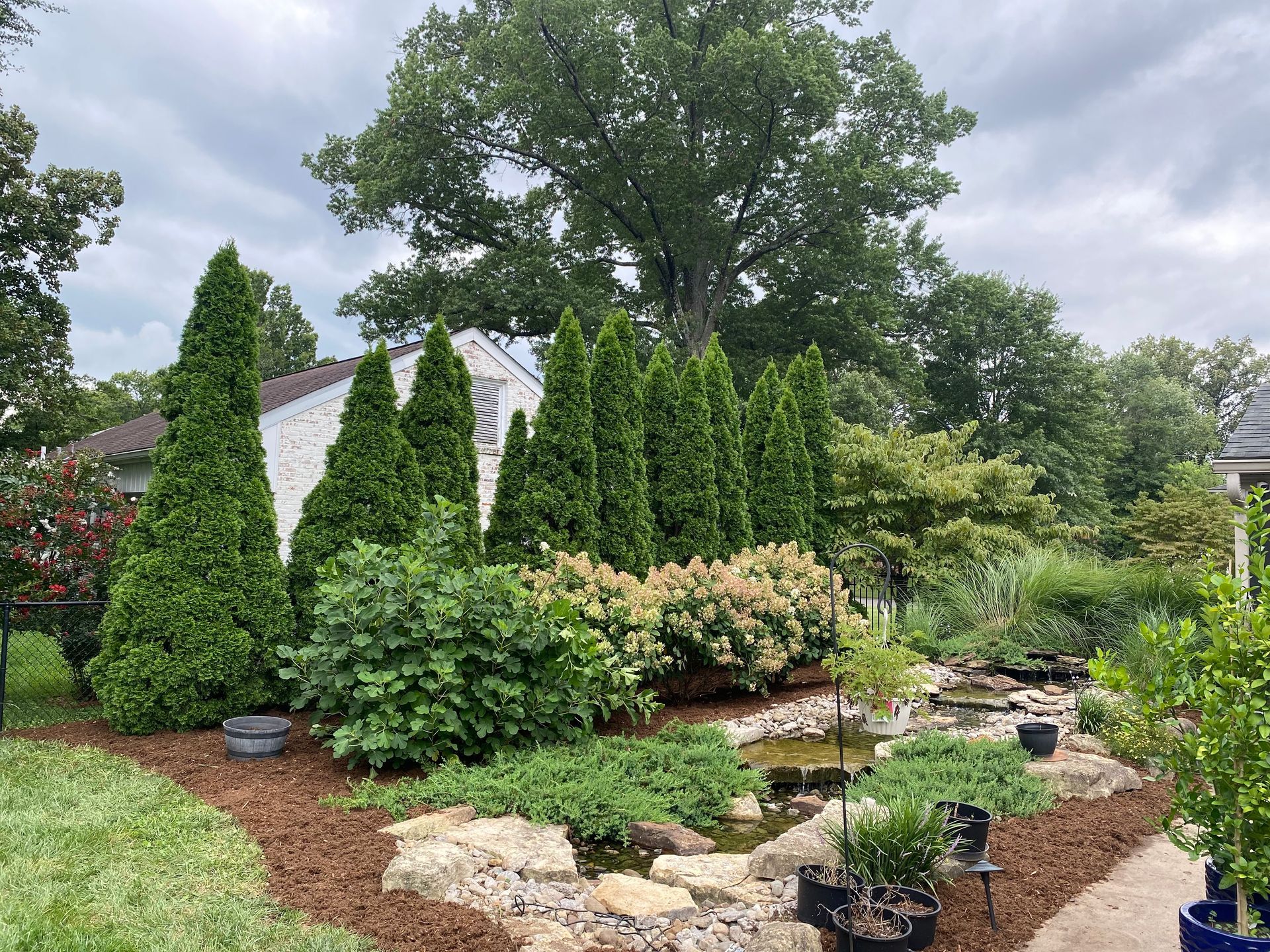
Garden maintenance is the ongoing care of planted beds, shrubs, trees, and hardscaped areas to keep a residential landscape healthy and looking intentional year-round. Below, we break down what a standard visit includes, how local providers differ, and how to compare garden maintenance services before you sign anything.
A typical visit covers far more than tidying up. It includes:
- Trimming shrubs and shaping hedges before they crowd walkways or windows
- Weeding and refreshing mulch in landscape beds
- Removing fallen leaves and debris during seasonal cleanup
- Checking trees and shrubs for pests, disease, or storm damage
- Clearing drainage paths so water moves away from beds and foundations
Tasks Included in a Standard Visit
Most professional garden maintenance services Louisville crews perform follow a predictable rhythm: assess, trim, weed, mulch, and haul away debris. The differences show up in the details, such as whether they prune with the plant's growth habit in mind or just cut everything back to the same height.
For homeowners in Anchorage, Prospect, or Indian Hills with mature plantings, that distinction matters. A shrub sheared without regard for its natural shape often grows back weaker and denser, which invites disease.
How Local Garden Maintenance Services Differ From One Another
Providers split into two broad camps. Some focus on recurring upkeep, while others treat maintenance as an add-on to design and installation work. Neither approach is wrong, but they serve different needs.
- Maintenance-first companies build routes around regular visits and know your property's history
- Design-first companies often handle upkeep as a courtesy for past clients rather than a core service
- Full-service firms cover design, installation, and ongoing care under one roof
The right fit depends on whether your yard needs steady upkeep or a larger transformation first.
Side-by-Side Look at Louisville Garden Maintenance Providers
Most comparison tables rank providers by name and service focus and stop there. That tells you what a company says it does, not whether it is set up to care for your beds for years. The criteria below are the ones that actually separate a garden maintenance crew from a general landscaping outfit.
| What to Compare |
Why It Matters |
What a Strong Answer Looks Like |
|---|---|---|
| Scope of garden work |
Some crews only tidy beds; others prune, divide perennials, and manage soil |
A written list of tasks per visit, including what is not included |
| Who is on site |
Crew turnover is the most common reason plant care slips |
A named lead who returns to your property each visit |
| Plant knowledge |
Shearing every shrub the same way weakens many species |
Pruning matched to each plant's growth habit |
| Insurance and credentials |
Protects you if a limb or a crew member is injured on your property |
Proof of general liability coverage and workers' compensation |
| References |
Installed gardens look good for one season; maintained ones show real skill |
Two or more properties cared for at least two years |
| Written agreement |
Verbal scopes are where disputes start |
Visit frequency, tasks, and how extra work is approved, in writing |
A few local patterns are worth knowing. Design-led studios often treat upkeep as a courtesy for past clients, so their maintenance calendar can fill up or pause during installation season. Maintenance-first crews build routes around regular visits, which usually means more consistent timing but less capacity for a full bed redesign. Full-service firms cover design, planting, and ongoing care, which suits homeowners in Anchorage, Prospect, or Indian Hills who want one point of contact for a mature property.
What most comparison tables miss is that design skill and maintenance discipline are separate things. A company can design a beautiful bed and still send a crew that cuts your perennials to the ground at the wrong time of year. Ask specifically who will be on your property each visit, and ask to see a garden they have maintained, not just one they installed.
how to verify a contractor's license and insurance
Questions to Ask a Landscaping Company Before You Sign
Ask any landscaping company these questions before signing: who performs the work, what is included in each visit, how often they come, how they handle plant problems, and what happens if you are unhappy with a visit. The answers reveal more than any brochure.
Here is the checklist we suggest keeping on hand:
- Who is my regular crew, and will it be the same people each visit?
- What exactly is included, and what costs extra?
- How do you handle drainage problems or wet spots?
- Can you show examples of gardens you maintain, not just installed?
- What is your policy if plants fail or a visit is missed?
- How do you communicate schedule changes?
A provider who hesitates on any of these questions is telling you something.
Building a Garden Maintenance Schedule for Louisville Seasons
A garden maintenance schedule here follows four distinct seasons, but the useful version is month by month. Below is the rhythm most practitioners in this region follow for planted beds, shrubs, and trees.
Late winter (February to early March). Dormant structural pruning on trees and shrubs, before new growth starts. It is easier on the plant and easier to see the shape you are building. Cut back ornamental grasses and last year's perennial stems before new shoots emerge.
Spring (March through May). The reset. Clear winter debris from beds, refresh mulch to about two to three inches (keep it off trunks and crowns), divide perennials that have crowded themselves, and edge bed lines. Watch for early pests as new growth flushes. This is also the window for planting most shrubs and perennials so roots establish before summer heat.
Summer (June through August). Holding the line. Deadhead spent blooms to keep plants producing, water newly planted material through dry stretches, and prune shrubs that flower on new wood. Scout for pests and disease weekly, since problems spread fastest in heat. Avoid heavy pruning in the hottest weeks.
Fall (September through November). Where many homeowners fall behind. Leaves left on beds smother groundcovers and hold moisture against crowns, which invites rot through winter. Clear them, plant spring-flowering bulbs and new trees while soil is still warm, and cut back perennials that have gone dormant. This is the best planting window of the year for most woody plants.
Winter (December through January). Protection and planning. Mulch sensitive shrubs after the ground cools, watch for heaving from freeze-thaw cycles, and prune dormant trees. Winter is also when a good provider walks the property and plans next year's bed changes.
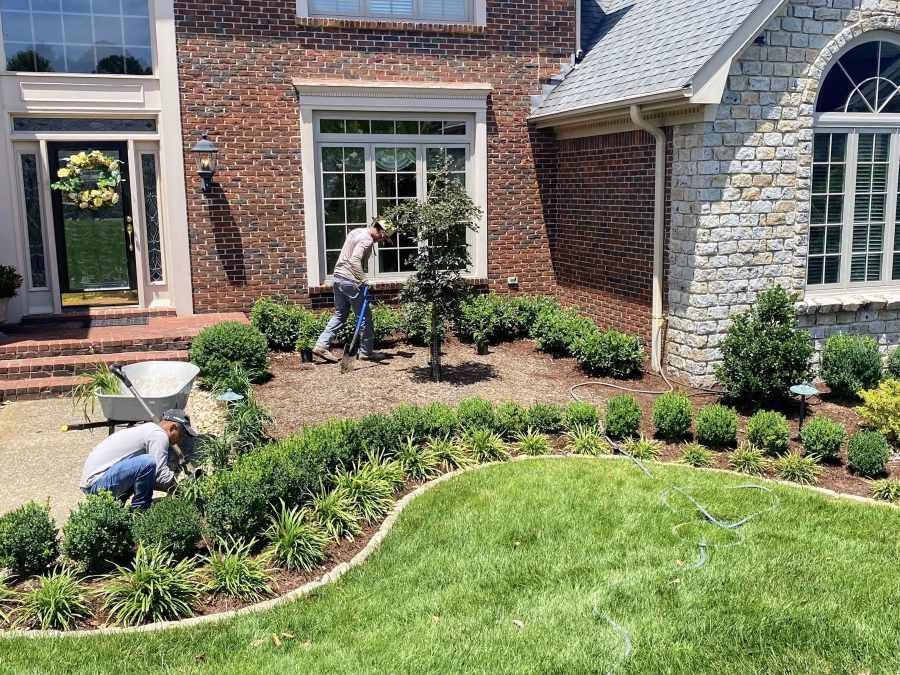
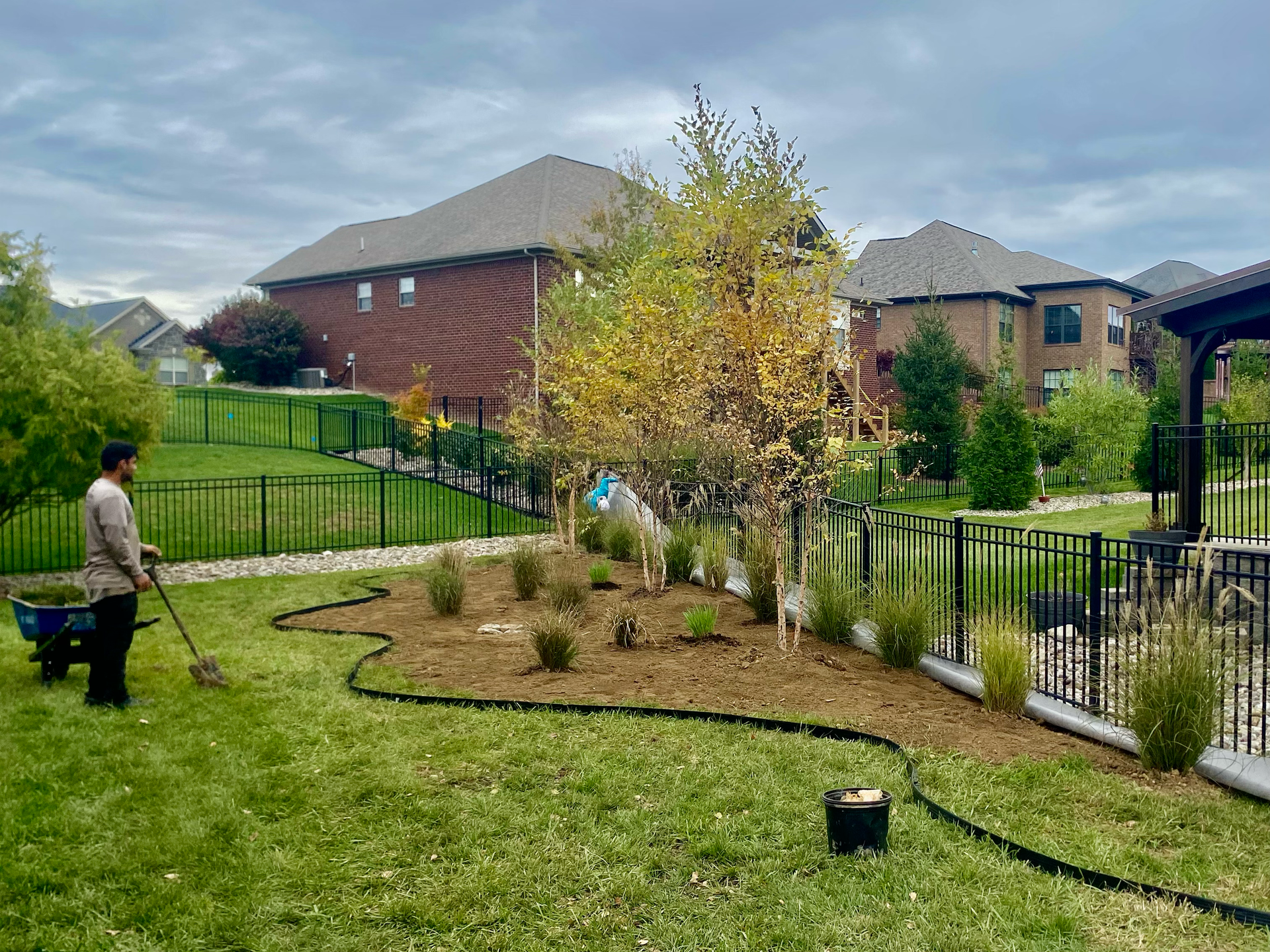
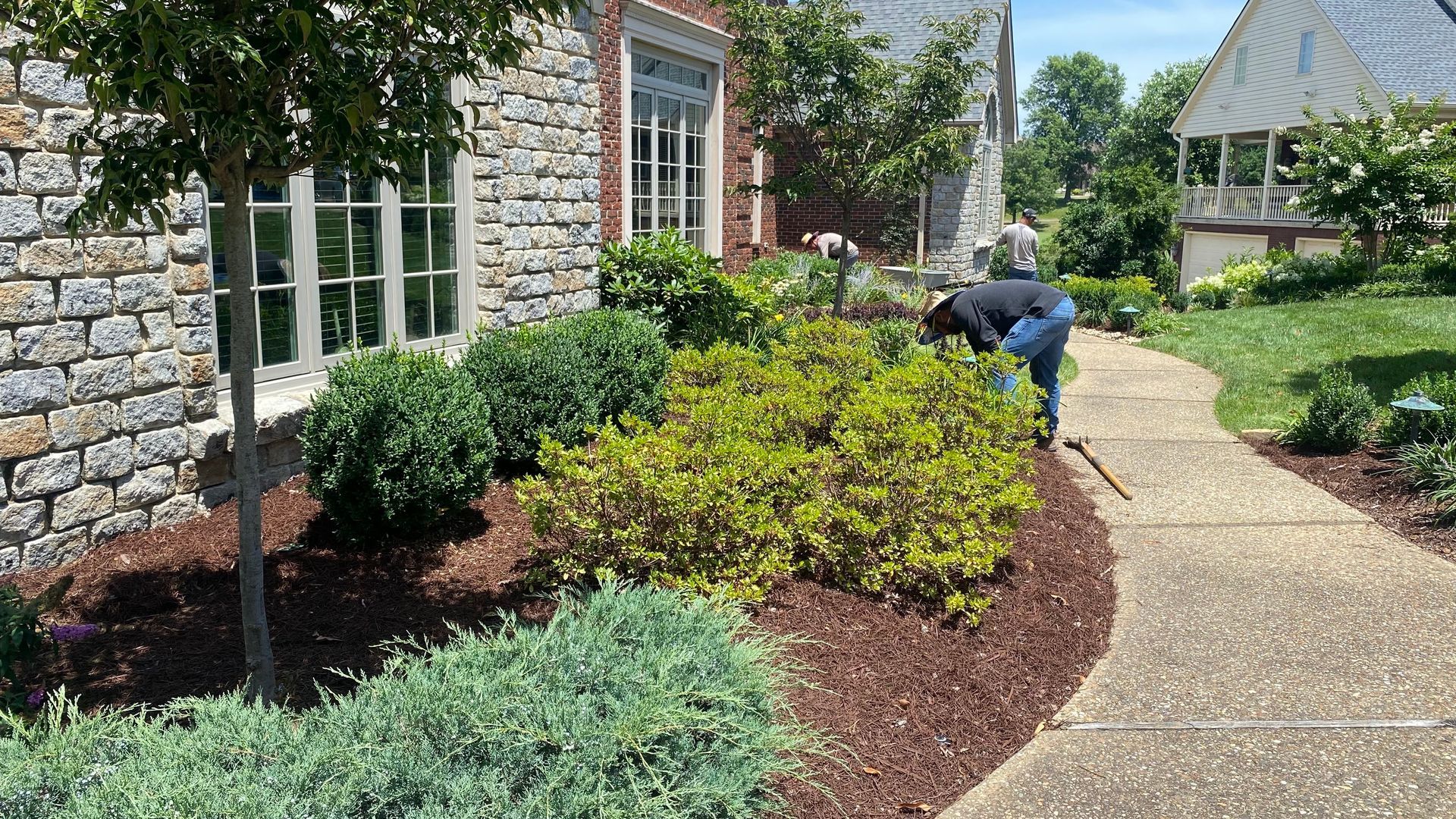
A gardener in work clothes trimming shrubs and tending planted beds in a residential garden in late summer, with a wheelbarrow and hand tools nearby
Timing shifts with your microclimate. Properties in Crestwood or Pewee Valley with heavier shade hold damp leaf cover longer, so fall cleanup there often runs later and needs a second pass. South- and west-facing beds in the Highlands and St. Matthews dry out faster in summer and may need extra watering checks. Beds in Lake Forest and Middletown with young plantings benefit from a lighter spring mulch layer so roots are not buried too deep.
A provider who can walk your property in each season and adjust the plan to what the plants are actually doing is worth more than one who follows the same calendar everywhere.
When Landscape Renovation Services Make More Sense Than Upkeep
Landscape renovation services make more sense than routine upkeep when the underlying layout, drainage, or soil is the real problem. No amount of trimming fixes a bed that floods every spring or soil that will not support healthy roots.
Signs it is time to renovate rather than maintain:
- Water pools in the same spot after every storm
- Shrubs have grown into each other and lost their shape permanently
- Beds sit in heavy shade or poor soil that nothing thrives in
- The layout no longer fits how you actually use the yard
This is where a full-service approach pays off. Our team handles garden design and planting alongside the upkeep that follows, so the fix addresses the cause instead of the symptom.
How to Compare Garden Maintenance Services and Pick the Right Fit
Pick a garden maintenance provider by matching scope, communication, and plant knowledge to your property, not by choosing the lowest quote. A cheap visit that damages your shrubs costs more than a fair one that keeps them healthy.
Use this decision framework:
- If your yard is overgrown or has drainage issues: start with a renovation assessment, then move to maintenance
- If your beds are healthy but need steady care: a maintenance-first provider fits best
- If you want one team for everything: choose a full-service firm
Ask for a written scope of work. It should list visit frequency, tasks included, and how extra work gets approved. Vague agreements are where disputes start.
Conclusion
Finding garden maintenance that actually protects your investment takes more than a low bid. It takes a provider who understands your soil, your drainage, and how your plants grow through every season. Bluegrass Gardening offers rooted knowledge, a long-term approach, and expertise across both garden design and hardscaping, so your landscape gets care that lasts. Contact Us to talk through your property and build a plan that fits it.
Frequently Asked Questions
How much should I budget for a backyard renovation in Louisville?
There is no single number that fits every yard. What you pay depends on the size of the space, how much grading or drainage work is needed, whether hardscaping like paver patios or retaining walls is involved, and the plants you choose. Ask each provider for a written scope that lists what is included and what is not, then compare the scopes rather than the totals alone.
What should professional garden maintenance include?
A typical plan covers bed weeding, mulching, shrub trimming, seasonal cleanup, leaf removal, and plant health checks. Some providers also handle drainage checks, tree care, and outdoor pest control. Ask for a written task list per visit so you know exactly what happens between appointments, and confirm whether debris hauling is part of the service.
How do I choose a garden maintenance service in Louisville?
Start with three things: proof of local work, a clear written scope, and a named contact who answers questions. Ask how long crews have worked in your area, whether they carry insurance, and how they handle a plant that fails after installation. A provider who walks your property before quoting will usually give you a more accurate plan than one who quotes from a photo.
How often should a residential garden be maintained?
Most Louisville gardens do well with visits every two to four weeks during the growing season, plus a spring refresh and a fall cleanup. Beds with heavy planting or fast-growing shrubs may need weekly attention in summer. The right frequency depends on your plant mix, soil, and how tidy you want the space to look between visits.
Can a garden maintenance service help with planting and landscape renovation?
Yes. Many providers offer both ongoing upkeep and one-time renovation work such as reworking overgrown beds, fixing drainage, adding privacy screening, or installing new plantings. If your yard has wet spots or poor soil, ask for a soil and drainage assessment first so the renovation solves the cause instead of covering it up.